

Common Causes of Ankle Pain
Ankle pain can arise from several different structures around the joint. Identifying the exact source is key to effective treatment and long-term recovery.
Ankle Pain Commonly Managed by Physiotherapy
Physiotherapists typically assess and treat ankle pain related to:
- Ankle sprains and ligament injuries
- Ongoing ankle instability following previous injury
- Achilles tendinopathy and calf-related pain
- Peroneal or tibialis posterior tendon pain
- Ankle stiffness and reduced joint mobility
- Pain following fracture or surgery
- Ankle pain affecting running, sport or daily activity
Management often focuses on restoring strength, movement, balance and load tolerance.
Ankle Pain Commonly Managed By Podiatry
Musculoskeletal podiatrists commonly assess ankle pain related to:
- Foot and ankle biomechanics
- Tendon overload linked to walking or running mechanics
- Recurrent ankle sprains or feelings of instability
- Flat foot or high arch related ankle pain
- Heel or plantar fascia problems influencing ankle load
- Footwear-related ankle symptoms
Podiatry input is particularly valuable where ankle pain is driven by how forces are applied through the foot during walking, running or standing.

Who We Help With Ankle Pain
We regularly support:
- Runners and endurance athletes
- Team sport athletes including football, rugby and hockey players
- Walkers and hikers
- Active adults wanting to stay mobile and independent
- People with physically demanding jobs
- Individuals returning to activity after injury or surgery
Our clinicians also have extensive experience working in elite sport environments, applying the same structured, evidence-based approach to both competitive athletes and recreationally active individuals.
How Ankle Pain is Assessed at Flex
Your ankle assessment is tailored to your symptoms and goals. Depending on your presentation, this may include:
- Detailed clinical history and symptom analysis
- Assessment of ankle joint movement and stability
- Strength testing of the calf, foot and lower limb
- Balance and control assessment
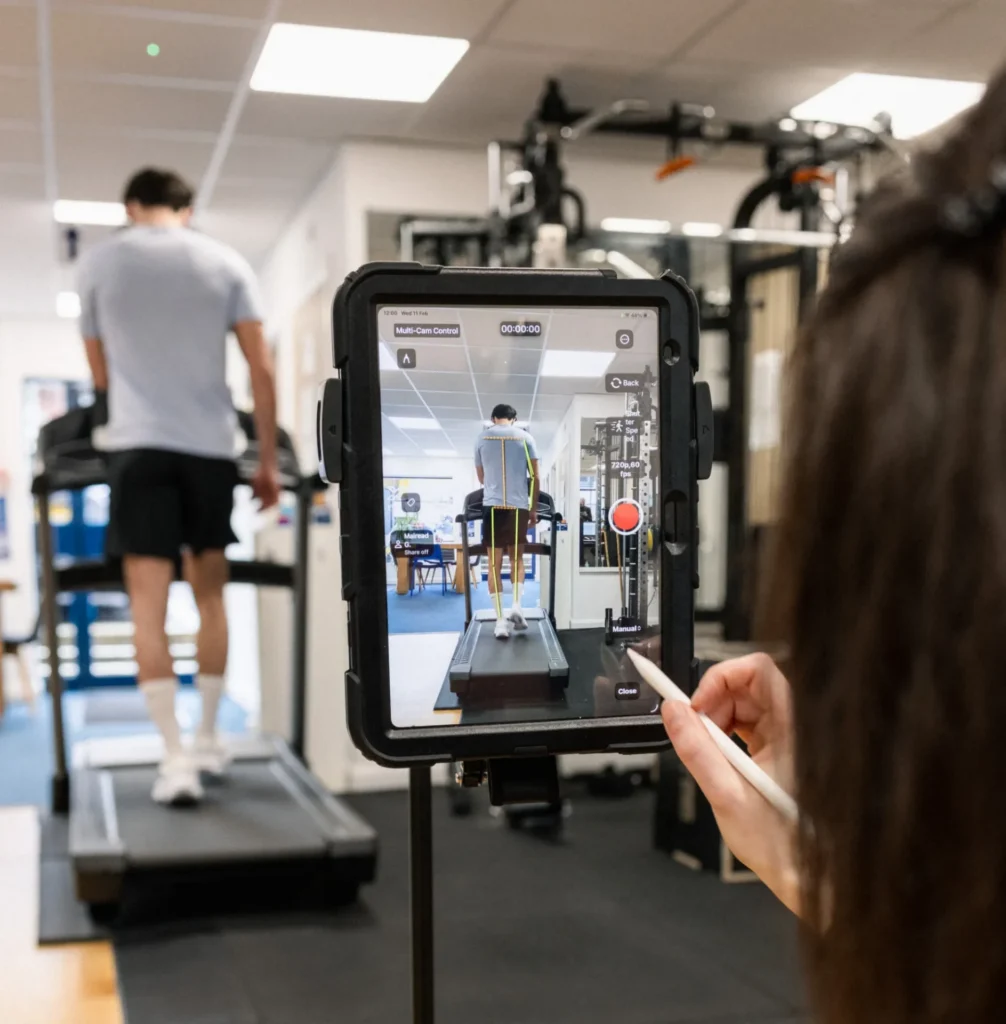
- Walking and running gait analysis
- Foot posture and biomechanics assessment
- Functional and load tolerance testing
Where appropriate, physiotherapy and podiatry assessments are combined to build a clear understanding of why your ankle pain has developed and what is required to resolve it.
Treatment Options for Ankle Pain
Treatment is individualised and based on a clear diagnosis. Your plan may include one or more of the following:
Physiotherapy for Ankle Pain
Hands-on treatment and rehabilitation focused on restoring movement, strength, balance and confidence. This may include exercise therapy, movement retraining and progressive loading to support safe return to activity.
Manual Therapy and Soft Tissue Treatment
Manual therapy techniques are used where appropriate to reduce pain, improve joint movement and address stiffness. This may include ankle and foot joint mobilisations, soft tissue techniques and sports massage to support comfort, mobility and rehabilitation progress.
Musculoskeletal Podiatry
Biomechanical assessment of the foot and ankle, including walking and running mechanics. Podiatry input may include footwear advice and orthotic intervention where appropriate to reduce overload and improve function.
Rehabilitation and Exercise Therapy
Progressive, supervised rehabilitation delivered in our on-site gym to restore strength, control and load tolerance while reducing the risk of recurrence.
Shockwave Therapy
For chronic tendon-related ankle pain such as Achilles or peroneal tendinopathy, particularly where symptoms have not responded to exercise-based rehabilitation alone.
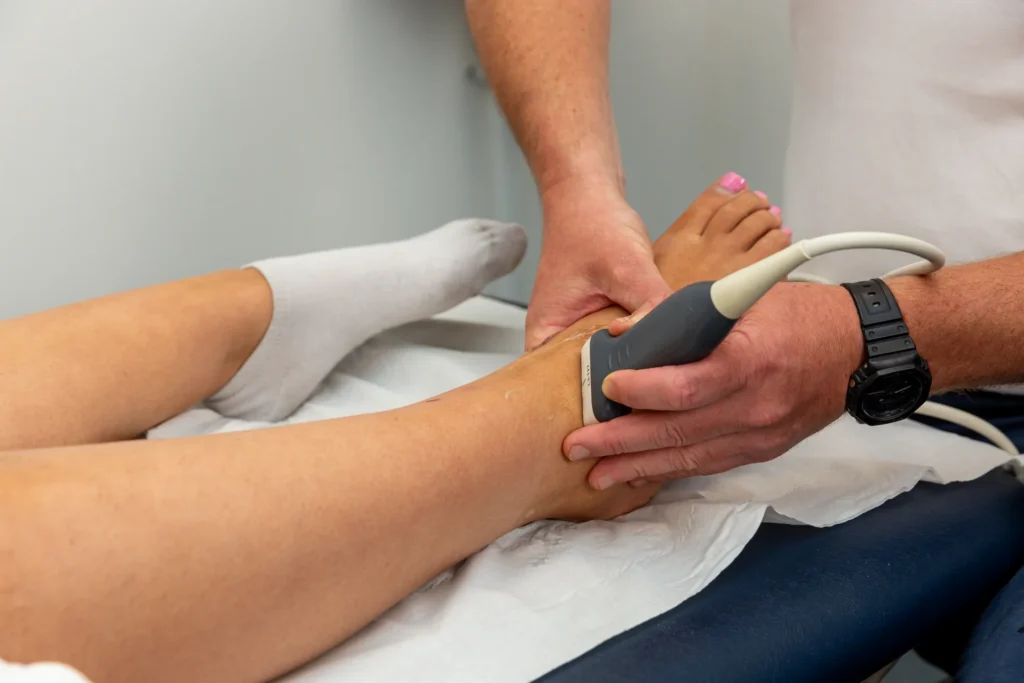
Ultrasound Imaging
Used when diagnosis is unclear or to assess tendon, ligament or joint structures in more detail to guide treatment decisions.
Ultrasound Guided Injections
Ultrasound guided injections may be considered for people with ongoing ankle pain, persistent symptoms or inflammation that is limiting movement or rehabilitation progress. Injections are used selectively to reduce pain and sensitivity and create an opportunity to progress rehabilitation rather than as a standalone solution.
Return to Sport and Performance Testing
Objective testing to guide safe return to running or sport, monitor progress and reduce re-injury risk.
Ankle Pain FAQs
Do I need to see a physiotherapist or podiatrist for ankle pain?
You do not need to decide. We will assess your ankle and involve physiotherapy, podiatry or both depending on what is driving your symptoms.
Do you treat sports-related ankle injuries?
Yes. We regularly treat ankle injuries in runners, footballers, rugby players and other athletes, from recreational to high-level sport.
Can ankle pain be treated without surgery?
In many cases, yes. Most ankle pain responds well to appropriate rehabilitation, biomechanical management and load modification.
Do you treat long-standing ankle pain?
Yes. We frequently see people with persistent ankle pain that has not resolved with previous treatment.