
Common Sports Injuries We Treat
Sports injuries can affect muscles, tendons, ligaments, joints and nerves. We regularly manage:
- Muscle strains and tears
- Ligament sprains
- Tendon injuries and tendinopathy
- Hamstring injuries
- Groin pain
- Ankle sprains
- Knee ligament injuries
- Rotator cuff injuries
- Shoulder instability
- Shin pain and stress reactions
- Plantar heel pain
- Recurrent or persistent sports injuries
- Post-surgical return to sport rehabilitation
Acute Sports Injuries
Acute injuries often occur during sprinting, twisting, tackling or landing.
Symptoms may include:
- Sudden pain
- Swelling
- Bruising
- Reduced strength
- Difficulty weight bearing
Early assessment is important to guide safe recovery timelines and avoid reinjury.
Overuse and Load-Related Injuries
Gradual onset injuries often develop due to changes in training volume, intensity or recovery.
Common examples include:
- Tendon pain
- Running related knee pain
- Achilles pain
- Shoulder pain in overhead athletes
Management focuses on progressive loading, strength development and correcting contributing movement patterns.
Who We Help
We regularly support:
- Runners and endurance athletes
- Football, rugby and hockey players
- Tennis and racket sport athletes
- Gym and strength training athletes
- Cyclists
- Youth athletes
- Recreationally active adults
- Competitive athletes returning to play
Our clinicians apply structured, data-driven principles used in elite sport environments to both competitive and recreational athletes.
How Sports Injuries are Assessed at Flex
Your assessment is tailored to your sport, position, goals and performance level.
This may include:
- Detailed injury history and mechanism analysis
- Assessment of joint movement and control
- Ligament and tendon testing
- Strength testing of key muscle groups
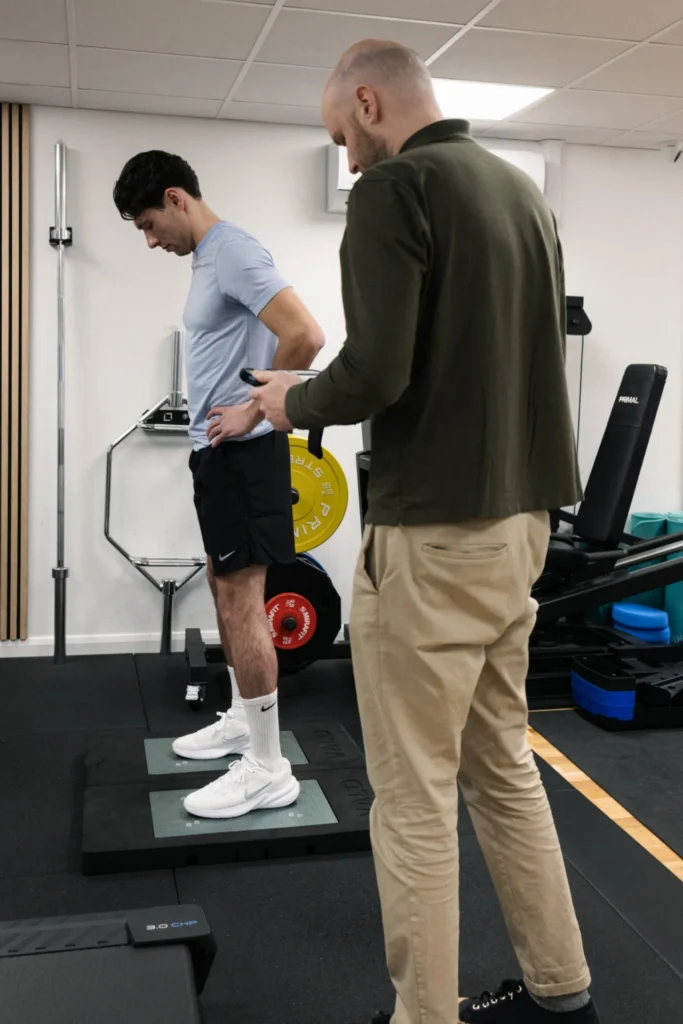
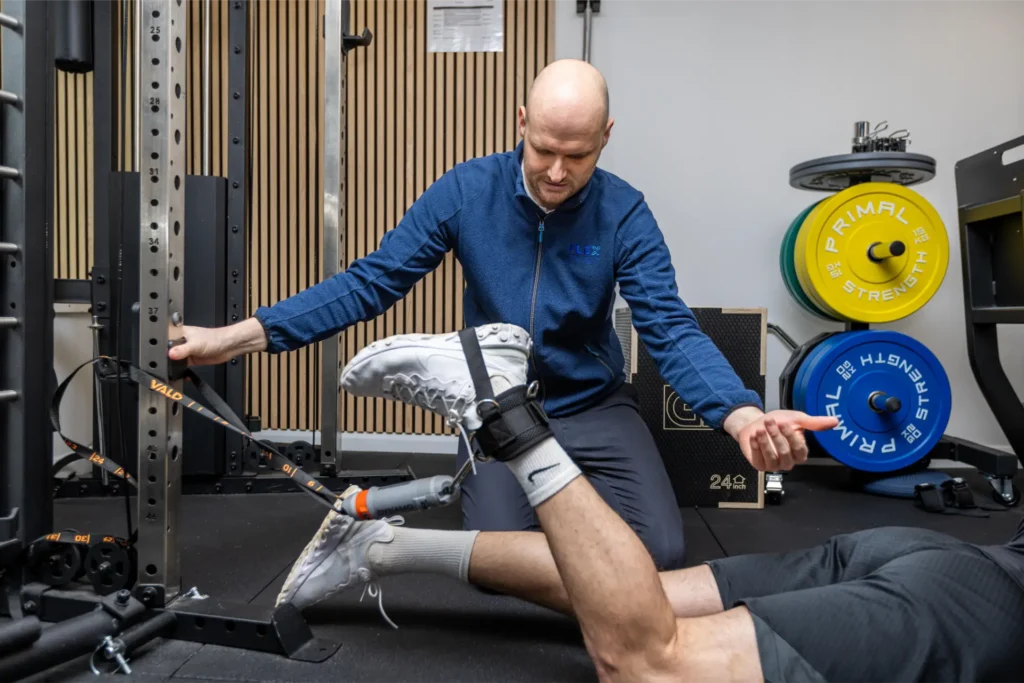
- Hand held dynamometry to objectively measure strength deficits
- Force plate testing to assess lower limb loading, asymmetry and power
- Functional testing including jumping, landing, cutting or sprint drills where appropriate
The aim is to understand not just what is injured, but why the injury occurred and what needs to change to reduce recurrence risk.
Treatment Options for Sports Injuries
Treatment is individualised and based on a clear diagnosis and return-to-sport plan.
Sports Physiotherapy
Hands-on treatment and structured rehabilitation focused on restoring movement quality, strength and performance.
Linked service: Sports Physiotherapy
Rehabilitation and performance training
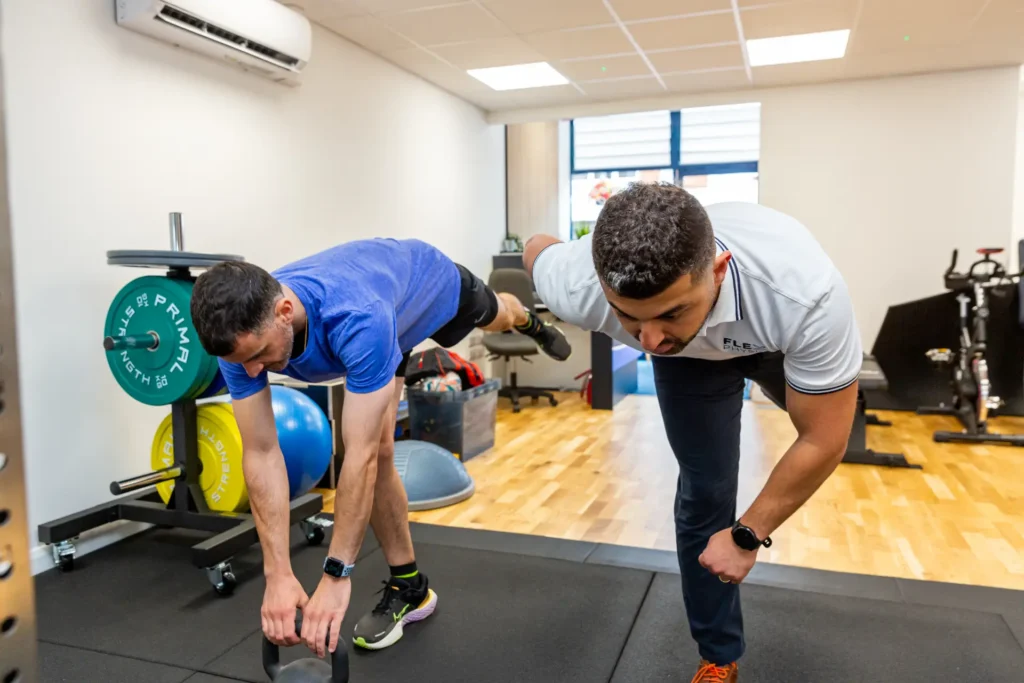
Progressive strength and conditioning delivered in our on-site gym to rebuild tissue capacity and reduce reinjury risk.
Shockwave therapy (ESWT)
Extracorporeal shockwave therapy may be used for persistent tendon injuries that have not responded fully to progressive loading alone.
Linked service: Shockwave Therapy
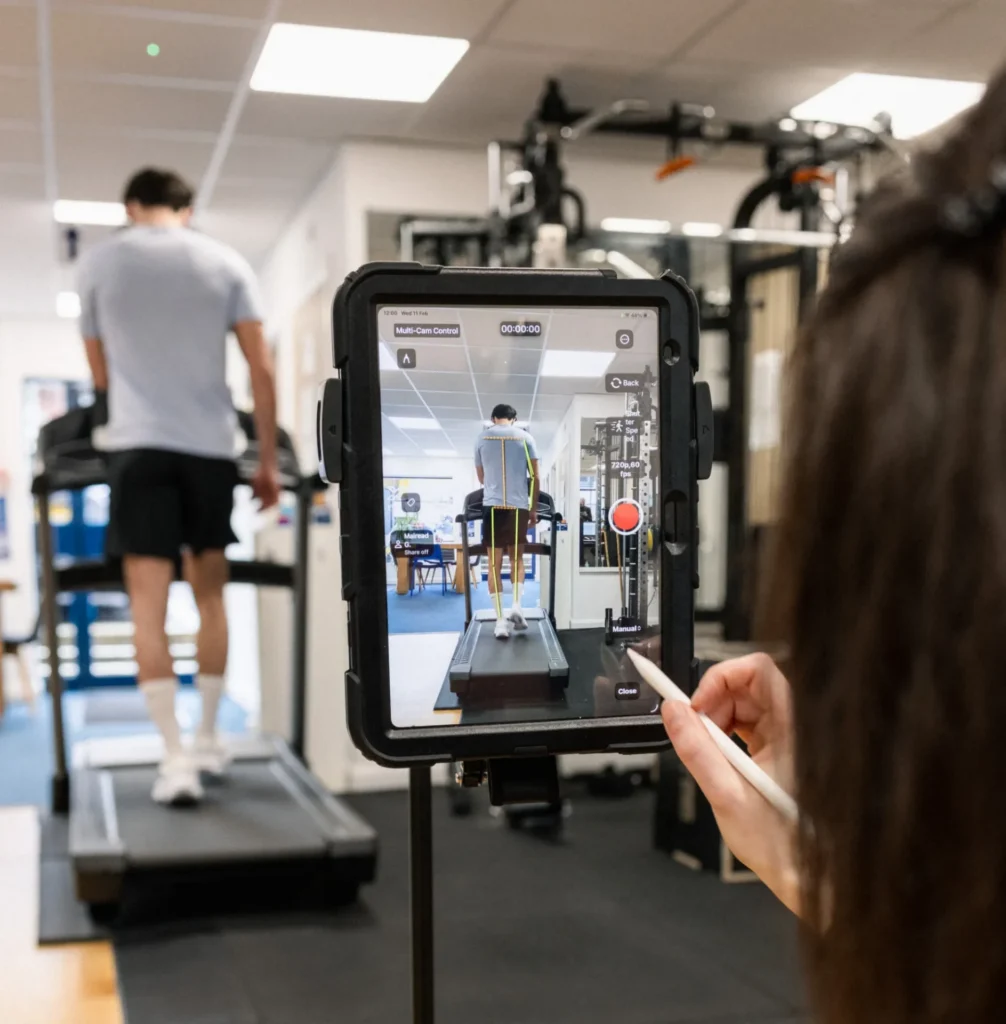
Running gait analysis
For runners, gait analysis can identify movement patterns contributing to injury risk.
Linked service: Running Gait Analysis
Objective strength and return to play testing
Force plate testing and hand held dynamometry provide measurable data to guide safe progression back to training and competition.
Linked service: Sports Physiotherapy and Performance Assessment
Return to Sport Rehabilitation
Returning to sport too early increases reinjury risk. We use structured criteria-based progression rather than time-based estimates.
This may include:
- Strength symmetry targets
- Power and jump testing
- Sport-specific drills
- Load progression planning
- Clear return-to-play criteria
Our goal is not just recovery, but performance readiness.
Sports Injury FAQs
How soon should I get assessed after an injury?
Early assessment helps clarify severity and guide appropriate loading and timelines.
Do I need a scan?
Not always. Many sports injuries can be diagnosed clinically. Imaging is considered if symptoms are severe or not progressing as expected.
How long will recovery take?
Recovery depends on injury type, severity and training demands. A clear plan is provided following assessment.
Can you help prevent reinjury?
Yes. Strength, power and movement testing allow us to identify risk factors and address them proactively.
When can I return to sport?
Return to sport is based on objective strength, power and functional testing rather than simply pain levels.
Book Sports Injury Treatment in Burgess Hill
If you have sustained a sports injury and want a clear diagnosis and structured return-to-sport plan, our team is here to help.
You can self-refer and book directly.
Expert assessment. Integrated care. Sports injury treatment at Flex Physiotherapy Burgess Hill.