
RUN FASTER. GET STRONGER. REDUCE INJURY RISK.

Knee
Heel and foot
Ankle
Hip and groin
Muscle strains
Overuse injuries
Post injury or post operative rehabilitation
Post injury or post operative rehabilitation
How Physiotherapy Helps Runners
Common issues we see in runners include:
- Runner’s knee (patellofemoral pain)
- Shin splints (medial tibial stress syndrome)
- Achilles tendinopathy
- Plantar fasciitis
- Iliotibial band (ITB) syndrome
- Hip and lower back pain
- Stress fractures
- Muscle and ligament injuries
At Flex Physiotherapy, we combine hands-on treatment, tailored rehabilitation, and running technique coaching with state-of-the-art facilities. Using elite testing software such as VALD force plates and handheld dynamometry, we give you clear answers, a structured plan, and the confidence to return to running stronger than before.
Your Running Assessment Journey
Acute & Assess
- Identify the source of pain
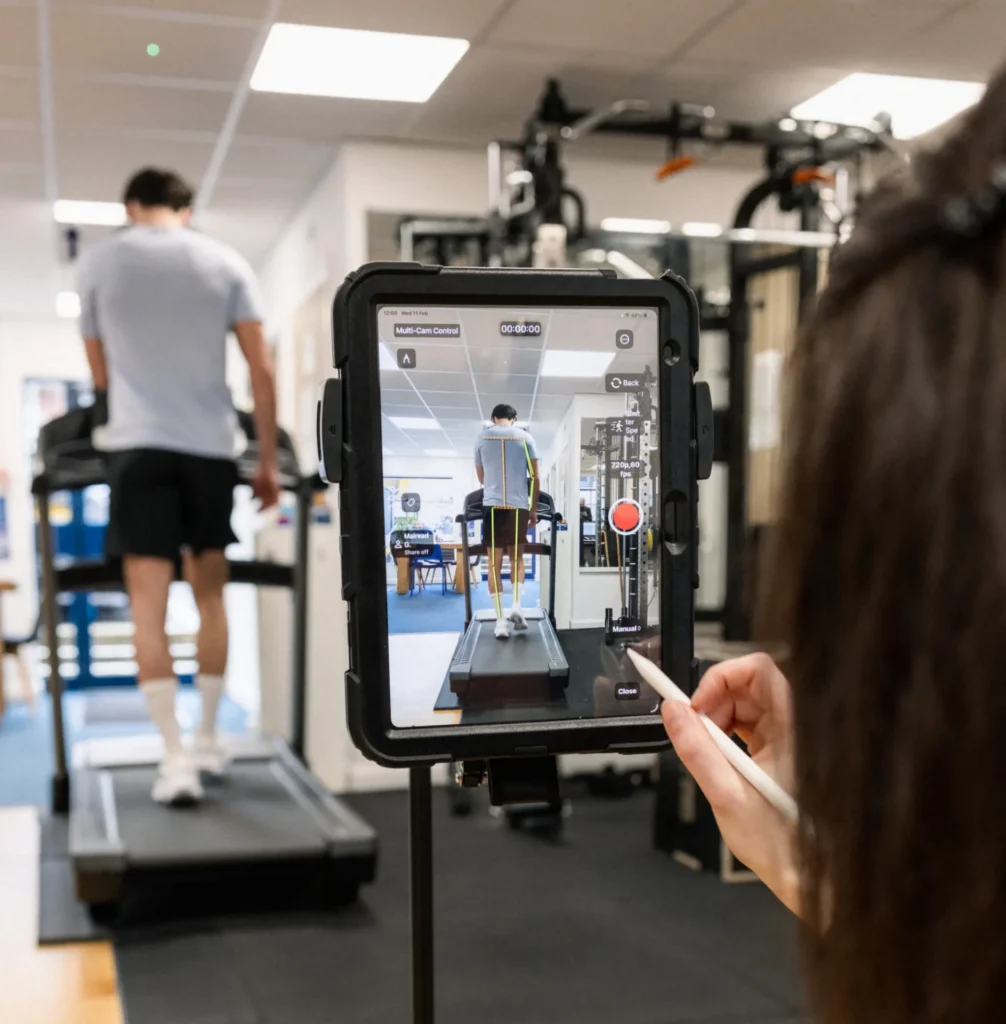
- Treadmill gait analysis with OnForm
- Strength and movement testing
- Tailored diagnosis and plan
Rehab
- Targeted strength and mobility work
- Running-specific drills and exercises
- Load management strategies
- Regular progress reviews
Return to Run
- Gradual return to outdoor running
- Technique refinement for efficiency
- Retesting and progress tracking
- Confidence to run pain free
Our goal is not just recovery — it is helping you return to running stronger, more efficient, and more confident than before
What to Expect
Before your appointment
- You will receive a booking confirmation email with a link to complete a short pre-assessment form about your training history and lifestyle.
- This helps us understand your background and goals before the session.
During your session
- Review of your questionnaire and discussion of your main concerns
- A short clinical assessment of your key injury or condition to confirm it is safe and appropriate to run
- Treadmill video gait analysis with OnForm software, allowing slow-motion review of your running mechanics
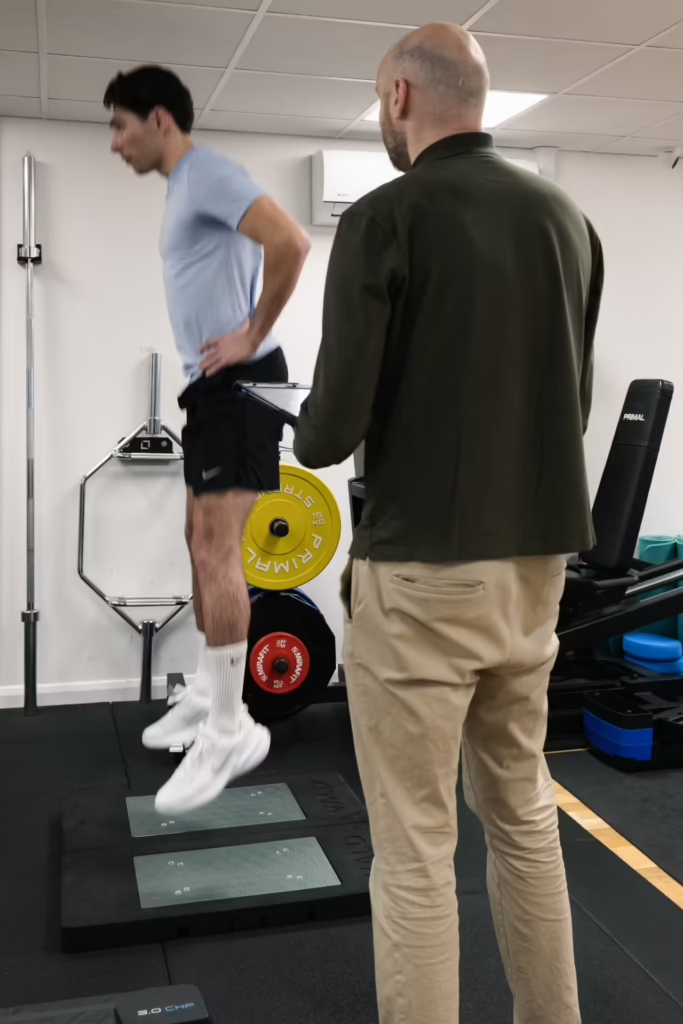
- Three bespoke tests using VALD force plates and VALD handheld dynamometry to measure strength, stability, jump height, and landing forces
After your appointment
- Access to your running footage and written report via OnForm
- Clear explanation of all findings in plain language
- Tailored recommendations to support your recovery, improve technique, and build performance
- A structured exercise plan and running drills to address key findings and improve efficiency
- A personalised rehabilitation plan if needed, or referral to our podiatrist for further support
Objective Testing With VALD
A running assessment isn’t just about watching you run. Alongside OnForm video analysis, we use VALD technology to objectively assess strength, power, stability and movement. Depending on your individual goals, this may include measures such as single-leg strength, jump performance, landing forces and left-to-right differences. This gives us measurable data alongside the clinical and running assessment, helping us identify relevant deficits and track progress over time.

Why Choose Flex?
Expert Team
Our physiotherapists are specialists in running-related injuries and rehabilitation, providing hands-on care and tailored treatment plans designed specifically for runners.
Podiatry Input
With in house podiatrists, we can assess foot mechanics, footwear, and orthotic needs to complement your physiotherapy and keep you running at your best.
Running-Specific Approach
We understand both the physical demands of running and the personal importance it holds for you. Everything we do is designed with runners in mind.
Long Term Support
Progress does not stop after one session. We offer retesting so you can not only feel your improvements but also see them clearly.
Cutting-Edge Technology
Using OnForm video analysis alongside VALD force plates and handheld dynamometry, we capture your running in detail and measure strength, stability, and landing forces. This provides accurate feedback you can revisit anytime.
Running Assessments FAQs
What should I wear?
Wear clothing and shoes suitable for running. Shorts or fitted kit are best so we can observe your movement. Avoid open toe or slip on shoes. Please also bring the trainers you usually run in, as this helps us analyse your natural running style.
Is it suitable for children?
Yes, running assessments are appropriate for children and teenagers.
Can I keep running while I recover?
In many cases yes, with modifications. We will guide you on safe training adjustments to avoid further injury.
Do I need a referral?
No referral is needed. You can book directly or include it as part of a treatment plan.
Will I need orthotics?
If required, our in house podiatrist can assess you for orthotics in a separate appointment.
Can I claim this on insurance?
No, this service is not covered by insurance providers.
How long does the assessment take?
A running assessment is 60 minutes and includes your clinical assessment, treadmill video analysis, VALD testing and discussion of your findings and recommendations.
Do I need to be injured to book?
No, many runners use assessments to improve technique, prevent injuries, or enhance performance.
How is this different from a standard physio session?
A running assessment combines clinical assessment, treadmill video analysis and objective VALD testing. This allows us to assess running mechanics alongside strength, power, stability and left-to-right differences, giving you a more detailed picture of how you move and perform.
Should I book physiotherapy sessions alongside my running assessment?
Yes, in most cases we recommend follow up physiotherapy sessions to work on rehabilitation, strength, and technique. Your physiotherapist will guide you on whether ongoing treatment will support your recovery and running goals.
How much does it cost?
Our Running Gait Analysis session costs £120 and includes a full video assessment, testing and report. Any follow-up sessions or treatment plans will be discussed with you before booking.
What is VALD testing?
VALD is an advanced testing system used to objectively measure aspects of strength, power, stability and performance. Depending on your goals, we may use force plates and handheld dynamometry to assess areas such as strength between limbs, jump performance, landing forces and other measures of physical capacity. Your physiotherapist will select the tests most relevant to you.