
Common Causes of Knee Pain
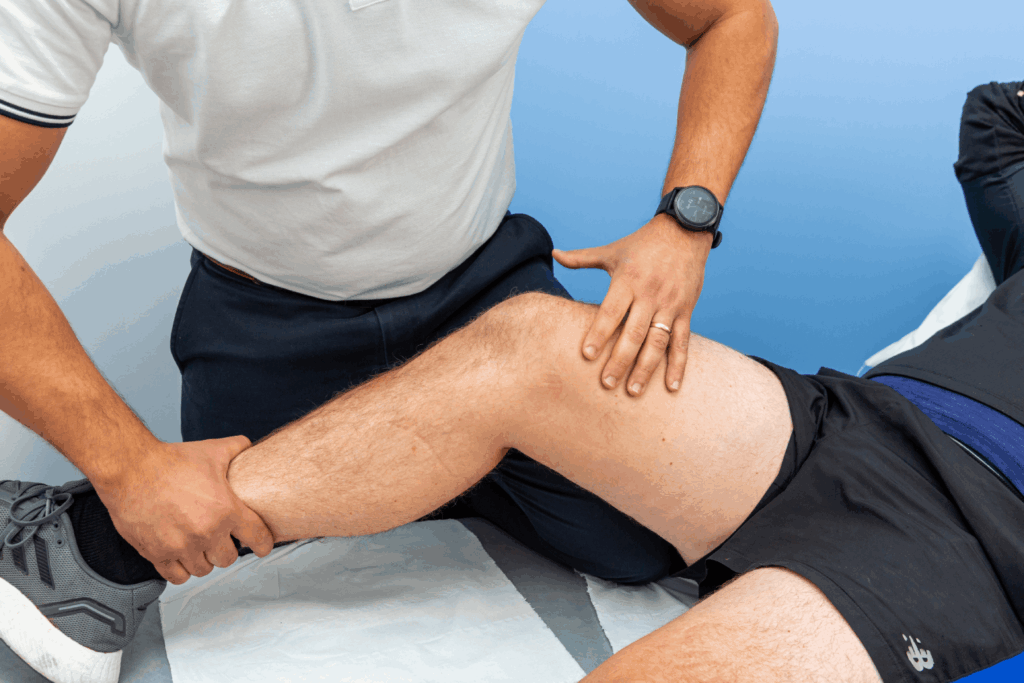
Knee pain can come from ligaments, cartilage, tendons, bursae or the joint itself. Pain location, swelling, clicking, instability and activity-related symptoms all help guide diagnosis.
Knee Conditions We Commonly Treat
- Anterior knee pain and patellofemoral pain syndrome (runner’s knee)
- Pain around or behind the kneecap
- Meniscal injury or meniscus-related pain, including locking or catching
- Recovery following meniscectomy
- Ligament injuries including ACL, PCL, MCL and LCL injuries
- ACL reconstruction recovery and return to sport rehabilitation
- Knee instability, giving way or buckling
- Baker’s cyst related pain or swelling behind the knee
- Pes anserine bursitis (inner knee bursitis)
- Patellar and quadriceps tendinopathy (jumper’s knee)
- Iliotibial band (ITB) related knee pain
- Knee pain following trauma or overuse
- Post-surgical knee rehabilitation including total knee replacement (TKR) recovery
Knee Osteoarthritis
We have extensive experience managing knee osteoarthritis across all compartments, including:
- Medial unicompartmental knee osteoarthritis
- Lateral unicompartmental knee osteoarthritis
- Patellofemoral joint osteoarthritis
- Tricompartmental knee osteoarthritis
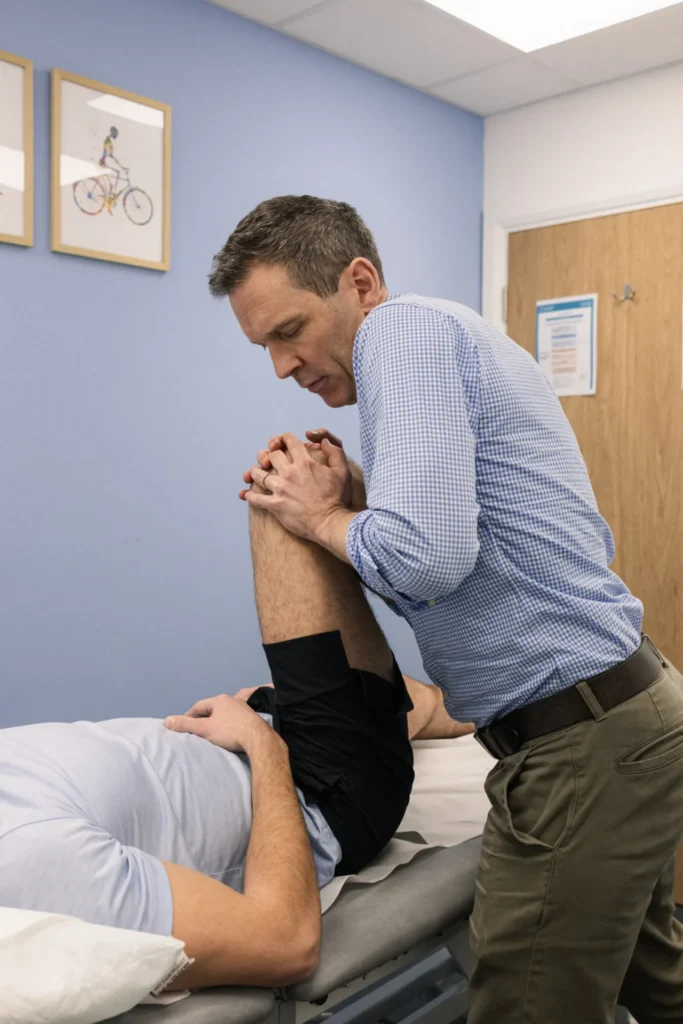
Osteoarthritis may present as pain, stiffness, swelling, grinding, reduced confidence on stairs or difficulty walking longer distances. Management focuses on symptom relief, strength, load management and maintaining activity and independence.

Who We Help With Knee Pain
We regularly support:
- Runners and endurance athletes
- Team sport athletes including football, rugby and hockey players
- Walkers and hikers
- Active adults wanting to stay mobile and independent
- People with physically demanding jobs
- Individuals recovering from knee surgery
- People managing long-term knee osteoarthritis
Our clinicians have extensive experience working in elite sport environments, applying the same structured and data-driven principles to both competitive athletes and recreationally active individuals.
How Knee Pain is Assessed at Flex
Your knee assessment is tailored to your symptoms, goals and activity level. This may include:
- Detailed clinical history and symptom analysis
- Assessment of knee movement, swelling and joint stability
- Ligament and meniscal testing where appropriate
- Strength testing of the quadriceps, hamstrings and lower limb
- Functional testing such as squatting, stairs and hopping
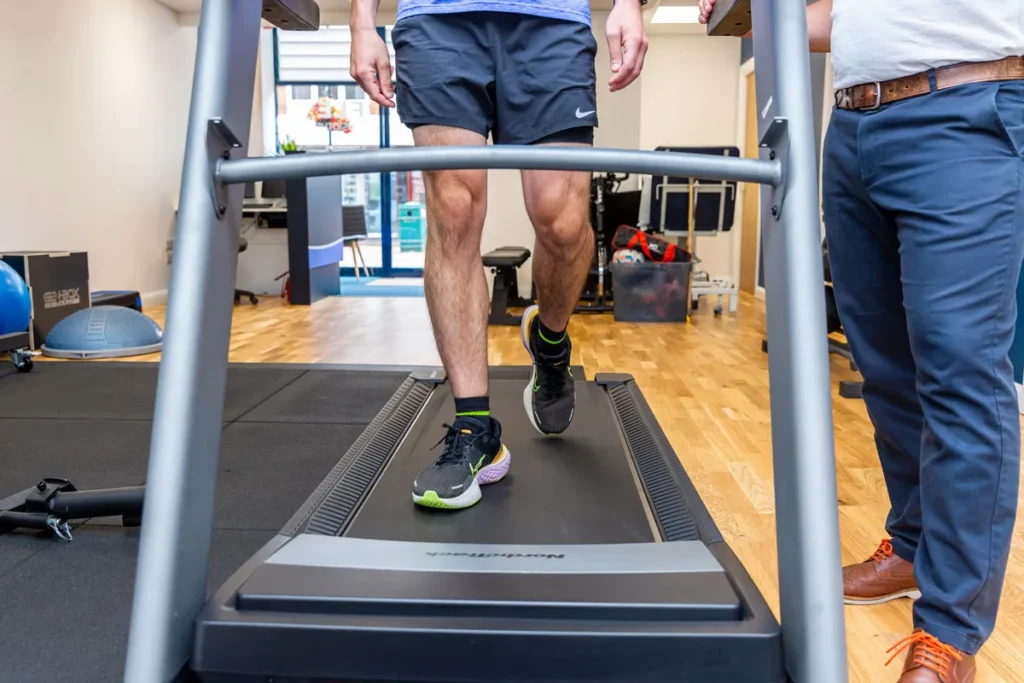
- Running gait analysis where relevant
- Advanced testing using force plates or dynamometry when indicated
The aim is to understand not just where your knee hurts, but why it hurts and what needs to change to support recovery.
Treatment Options for Knee Pain
Treatment is individualised and based on a clear diagnosis. Your plan may include one or more of the following:
Physiotherapy for Knee Pain
Hands-on treatment and rehabilitation focused on restoring movement, strength, control and confidence. Progressive exercise therapy is central to long-term improvement.
Manual Therapy and Soft Tissue Treatment
Manual therapy techniques may be used to reduce pain, improve joint mobility and address stiffness. This can include knee joint mobilisations, soft tissue techniques and sports massage to support rehabilitation progress.
Rehabilitation and Exercise Therapy
Progressive, supervised rehabilitation delivered in our on-site gym to improve strength, control and load tolerance while reducing re-injury risk.
Shockwave Therapy
For selected tendon-related knee conditions such as patellar tendinopathy or persistent tendon pain that has not responded to exercise-based rehabilitation alone.
Knee Bracing
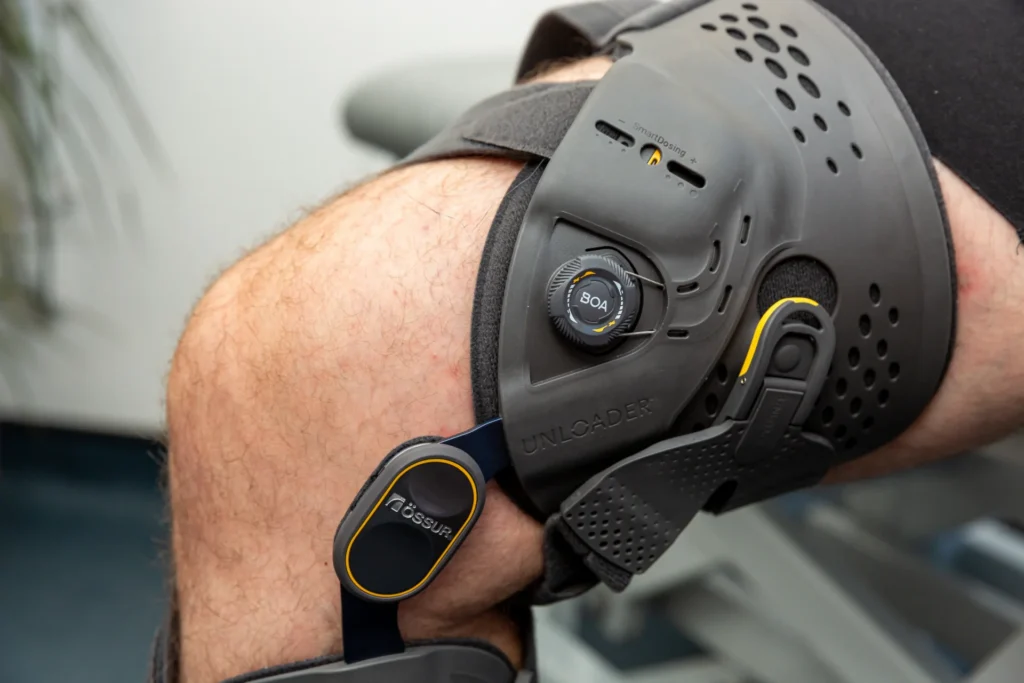
Specialist knee bracing may be recommended to support stability, offload painful joint compartments or improve confidence with movement.
This includes unloader knee bracing for knee osteoarthritis and functional bracing for ligament injuries or instability.
Ultrasound Imaging
Used when diagnosis is unclear or to assess tendons, ligaments, bursae or joint structures in more detail.
Ultrasound Guided Injections
In selected cases, ultrasound guided injections may be considered for ongoing knee pain, swelling or symptoms limiting rehabilitation.
Options may include:
- Steroid injections to reduce pain and inflammation
- Hyaluronic acid injections to improve joint lubrication and cushioning
- Arthrosamid injections for longer-term management of knee osteoarthritis
Injections are used to support rehabilitation rather than replace it.
Running Assessment and Performance Testing
For runners and active individuals, running gait analysis helps identify movement patterns contributing to knee pain.
Force Plate Testing and Advanced Rehabilitation
Objective testing using force plates and strength assessment to guide rehabilitation progression and return to sport decisions.
Knee Pain FAQs
Why does my knee hurt even without an injury?
Knee pain can develop due to overuse, changes in activity, muscle weakness, joint stiffness or early degenerative change, even without a clear injury.
What does the location of my knee pain mean?
Pain around the kneecap often relates to patellofemoral pain. Inner or outer knee pain may involve joint overload or ligament strain. Pain behind the knee can be linked to a Baker’s cyst or swelling within the joint.
Is knee clicking or popping a problem?
Clicking or popping is common and not always serious. Locking, catching or giving way should be assessed.
Can knee pain be treated without surgery?
In many cases, yes. Most knee problems respond well to rehabilitation, strength-based exercise and load management.
Do you treat ACL injuries and return to sport?
Yes. We regularly treat ACL injuries both non-surgically and following reconstruction, using structured rehabilitation and return to sport testing.
Do knee braces really help?
Yes. Unloader knee braces can significantly reduce pain and improve function in knee osteoarthritis, particularly for people who want to remain active.
When should I seek help for knee pain?
If pain is persistent, worsening, associated with swelling or instability, or limiting daily activity or sport, assessment is recommended.