

Common Causes of Shoulder Pain
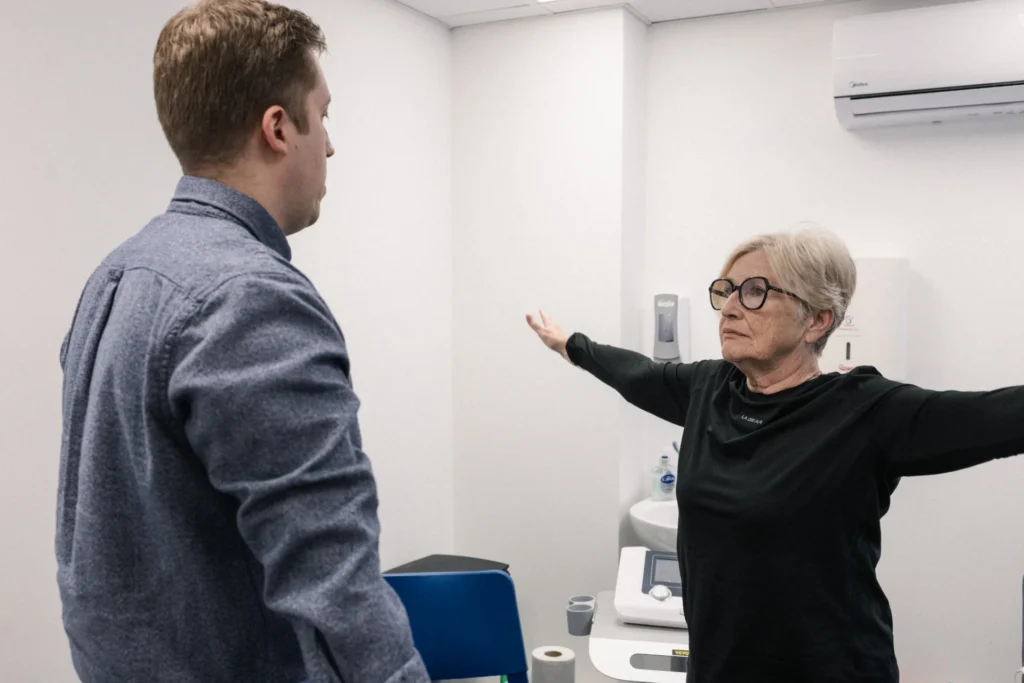
Shoulder pain can originate from the rotator cuff tendons, the joint capsule, the labrum, surrounding muscles, bursae or the acromioclavicular joint. Pain location, weakness, stiffness, instability and activity-related patterns all help guide diagnosis.
Shoulder Conditions We Commonly Treat
- Rotator cuff related shoulder pain
- Rotator cuff tendinopathy
- Partial rotator cuff tears
- Subacromial bursitis
- Calcific tendonitis
- Frozen shoulder (adhesive capsulitis)
- Shoulder osteoarthritis
- Shoulder instability
- Recurrent shoulder dislocation
- Acromioclavicular joint pain
- Biceps tendon related shoulder pain
- Labral injuries
- Shoulder pain in swimmers and overhead athletes
- Post-surgical shoulder rehabilitation
Rotator Cuff Related Shoulder Pain
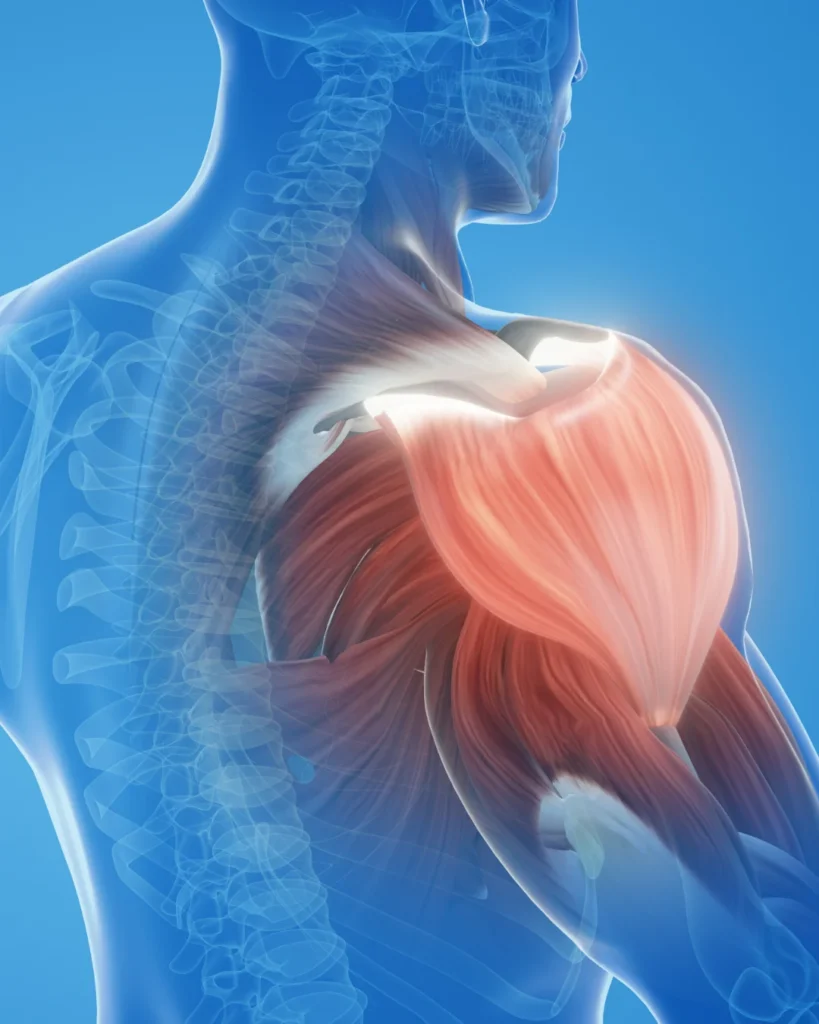
The rotator cuff muscles play a key role in shoulder stability and control. Overload, weakness or altered movement patterns can lead to pain with lifting, reaching or overhead activity.
Symptoms may include:
- Pain when lifting the arm
- Weakness or heaviness in the shoulder
- Pain at night when lying on the affected side
- Pain with repetitive overhead movements
Assessment focuses on strength, movement control and load tolerance. Where symptoms are persistent or diagnosis requires clarification, diagnostic ultrasound may be used to assess the rotator cuff tendons and subacromial bursa.
Treatment centres on progressive strengthening and rehabilitation. In cases where inflammation within the subacromial bursa is limiting rehabilitation progress, an ultrasound guided corticosteroid injection into the bursa may be considered to reduce pain and create a window for more effective loading.

Calcific Tendonitis
Calcific tendonitis occurs when calcium deposits form within a rotator cuff tendon, often causing significant pain and restriction of movement.
Ultrasound imaging can confirm the presence and size of calcium deposits and help guide management decisions. In selected cases, ultrasound guided barbotage may be recommended. This procedure uses ultrasound guidance to precisely target and break up the calcium deposit, aiming to reduce pain and restore function when combined with rehabilitation.
Frozen Shoulder
Frozen shoulder is characterised by progressive pain and stiffness with significant restriction of movement.
It often presents as:
- Gradual onset shoulder pain
- Increasing stiffness over time
- Difficulty reaching overhead or behind the back
- Pain at night
Clinical assessment identifies the stage and severity of stiffness. Ultrasound may be used to exclude other structural causes where appropriate.
Treatment focuses on pain management, maintaining mobility and guided rehabilitation through each phase of recovery.
Where pain and capsular tightness are significantly limiting progress, ultrasound guided hydrodistension may be considered. Hydrodistension gently stretches the joint capsule using fluid delivered under ultrasound guidance. This can reduce pain and improve movement, allowing rehabilitation to progress more effectively.
Shoulder Osteoarthritis
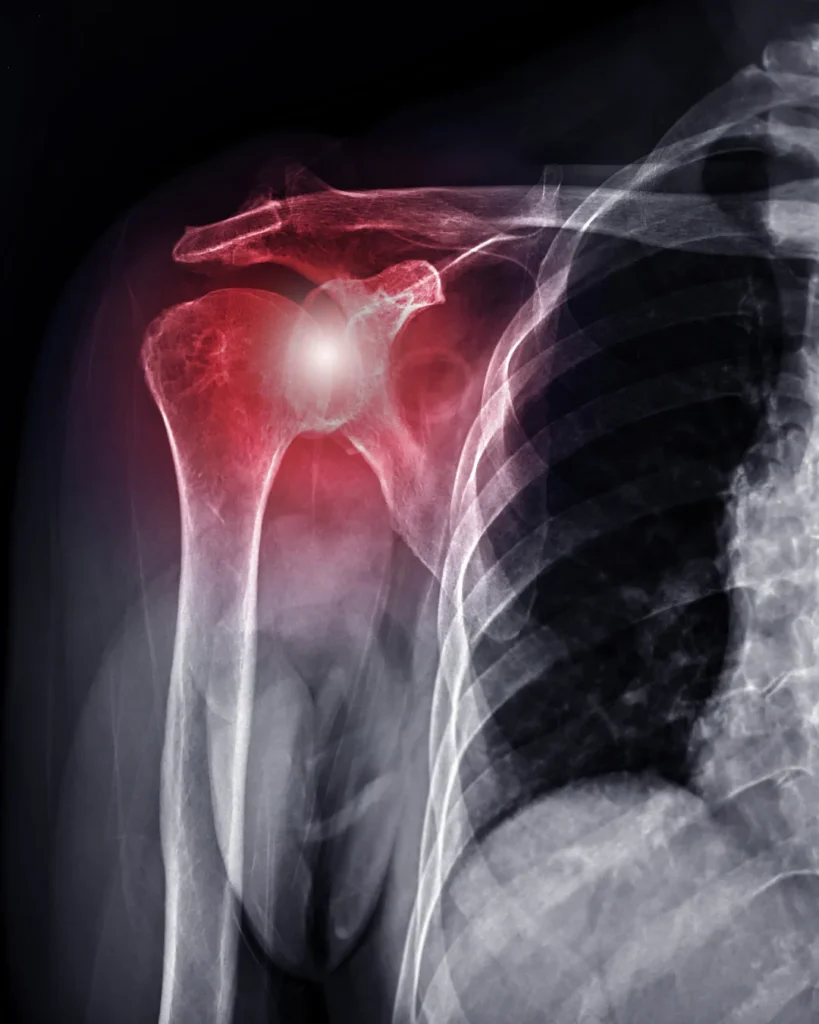
Shoulder osteoarthritis involves cartilage wear within the joint and may cause stiffness, grinding sensations and activity-related pain.
Ultrasound imaging can assess joint inflammation and guide targeted treatment. Where appropriate, ultrasound guided injections may be used to target the shoulder joint directly.
Options may include corticosteroid injections to reduce inflammation during painful flare-ups, or hyaluronic acid injections to improve joint lubrication and support smoother movement. These injections aim to reduce pain and stiffness so that strengthening and functional rehabilitation can continue more effectively.
Shoulder Instability and Dislocation
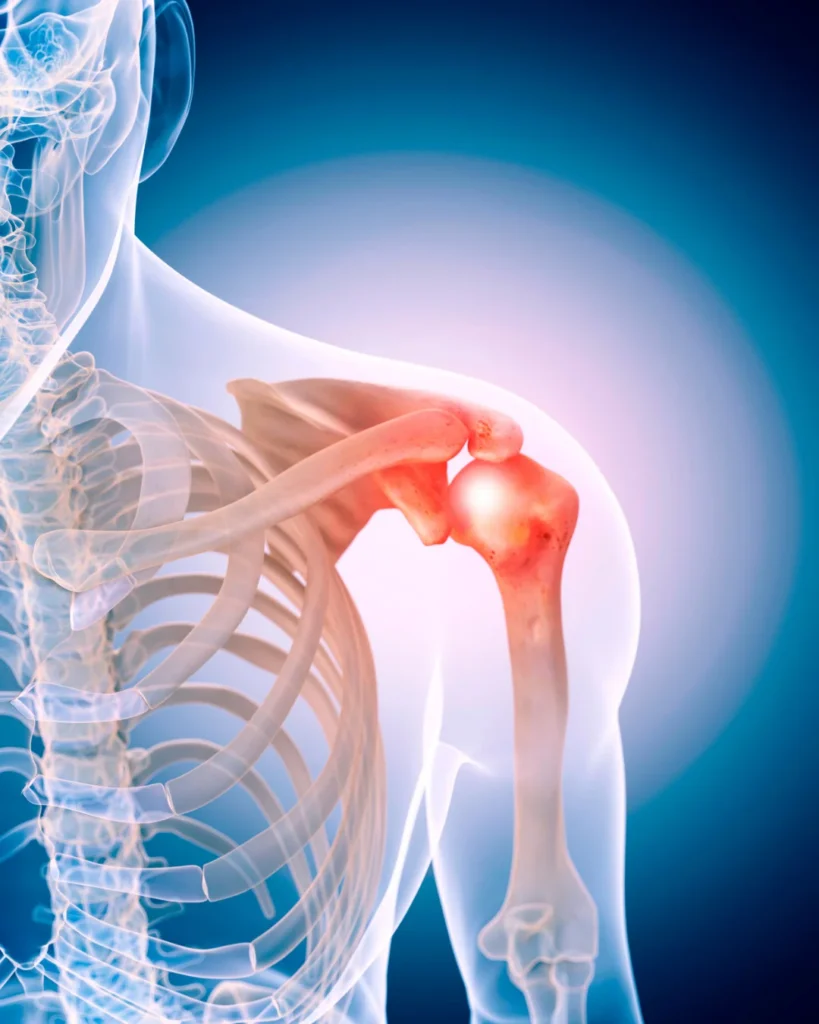
Shoulder instability can occur following trauma or repeated overhead activity. Some people experience a sensation of slipping, catching or giving way.
Assessment includes strength testing, control assessment and specific instability tests. MRI may be considered if labral involvement is suspected.
Rehabilitation focuses on improving rotator cuff strength, scapular control and dynamic stability to reduce recurrence risk and support return to sport.
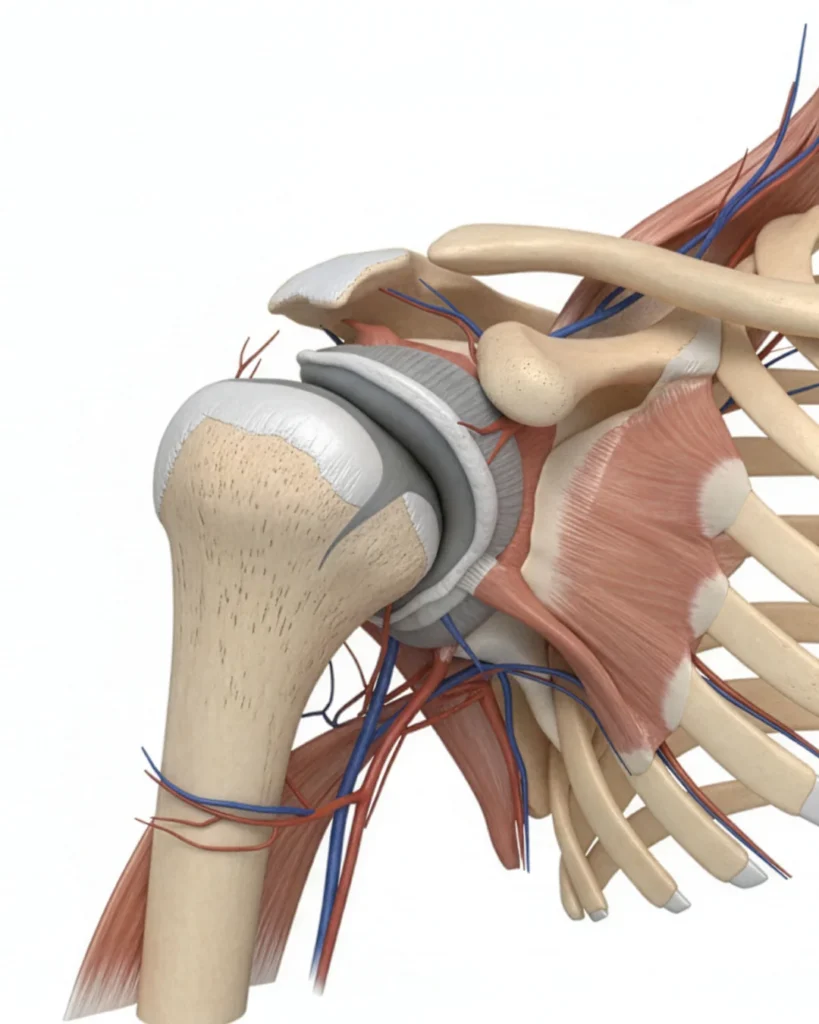

Who We Help With Shoulder Pain
We regularly support:
- Gym-goers and strength training athletes
- Swimmers and overhead athletes
- Racket sport players
- Manual workers
- Office workers with upper limb strain
- Active adults wanting to stay mobile and independent
- Individuals recovering from shoulder surgery
- People managing persistent or recurrent shoulder pain
Our clinicians apply structured, data-driven principles to both competitive athletes and recreationally active individuals.
How Shoulder Pain is Assessed at Flex
Your shoulder assessment is tailored to your symptoms, goals and activity level. This may include:
- Detailed clinical history and symptom analysis
- Assessment of shoulder movement and range of motion
- Strength testing of the rotator cuff and scapular muscles
- Hand held dynamometry to objectively measure shoulder strength
- Force plate testing where relevant for upper limb loading and performance
- Special tests for instability or labral involvement
- Ultrasound imaging where clinically indicated
- Functional testing relevant to work or sport
The aim is to understand not just where your shoulder hurts, but why it hurts and what needs to change to support recovery.
Treatment Options for Shoulder Pain
Treatment is individualised and based on a clear diagnosis.
Physiotherapy for shoulder pain
Hands-on treatment and rehabilitation focused on restoring movement, strength, control and confidence. Progressive exercise therapy is central to long-term improvement.
Linked service: Physiotherapy
Manual therapy and soft tissue treatment
Joint mobilisations and soft tissue techniques may be used to reduce pain and improve movement quality to support rehabilitation progression.
Linked service: Sports Massage
Rehabilitation and exercise therapy
Progressive, supervised rehabilitation to improve rotator cuff strength, scapular control and load tolerance while reducing recurrence risk.
Shockwave therapy (ESWT)
May be used for selected persistent tendon-related shoulder pain, particularly rotator cuff tendinopathy, where symptoms have not responded fully to structured loading alone.
Linked service: Shockwave Therapy
Ultrasound imaging
Used where diagnosis requires clarification or when symptoms are not progressing as expected. Ultrasound allows dynamic assessment of tendons, bursae and joint structures.
Linked service: Ultrasound Imaging
Ultrasound guided injections
Injections are considered when pain or inflammation is limiting rehabilitation progress. Under ultrasound guidance, medication can be precisely delivered to the relevant structure.
Depending on diagnosis, this may include:
- Corticosteroid injection into the subacromial bursa for rotator cuff related pain
- Hydrodistension for frozen shoulder
- Barbotage for calcific tendonitis
- Corticosteroid or hyaluronic acid injection into the shoulder joint for osteoarthritis
Injections are used to support, not replace, structured rehabilitation.
Linked service: Ultrasound Guided Injections
Objective strength testing and return to sport progression
Force plate testing and hand held dynamometry allow us to measure strength deficits, track progress and guide safe return to higher-level activity or sport.
Linked service: Sports Physiotherapy and Performance Assessment
Shoulder Pain FAQs
Why does my shoulder hurt without a specific injury?
Shoulder pain often develops due to changes in load, repetitive activity, reduced strength or altered movement patterns rather than a single traumatic event.
Is a rotator cuff tear serious?
Many rotator cuff tears can be managed successfully with rehabilitation. The size of a tear does not always correlate with pain levels.
What is the difference between rotator cuff pain and frozen shoulder?
Rotator cuff related pain typically causes pain with movement but relatively preserved range. Frozen shoulder involves significant stiffness and restricted movement in multiple directions.
Do I need an MRI for shoulder pain?
Most shoulder pain does not require imaging. Scans are considered if symptoms are severe, persistent or not progressing as expected.
Can shoulder instability improve without surgery?
Yes. Many cases respond well to structured rehabilitation focusing on strength and control.
Should I stop using my shoulder if it hurts?
Complete rest is rarely helpful. Guided, progressive loading is usually more effective than avoiding movement entirely.
When should I seek help for shoulder pain?
If pain is persistent, worsening, associated with weakness or instability, or limiting work or sport, assessment is recommended.
When would I need a shoulder injection?
An injection may be considered if pain or inflammation is limiting your ability to progress with rehabilitation. Injections are not a first-line treatment but can be helpful when symptoms are persistent, severe or preventing effective strengthening.
What type of shoulder injections do you offer?
Depending on diagnosis, options may include steroid injections to reduce inflammation, hyaluronic acid injections for shoulder osteoarthritis, hydrodistension for frozen shoulder, or barbotage for calcific tendonitis. All injections are performed under ultrasound guidance.
Are shoulder injections painful?
Most injections are well tolerated. You may feel some pressure or temporary discomfort during the procedure. Some people experience a short-term flare of pain for 24 to 48 hours afterwards before symptoms settle.
How long do shoulder injections last?
Duration varies depending on the condition and the type of injection. Corticosteroid injections may provide relief for weeks to months. Hyaluronic acid injections can provide longer-lasting joint lubrication benefits. Hydrodistension and barbotage aim to support longer-term improvement when combined with rehabilitation.
Will I still need physiotherapy after an injection?
Yes. Injections are used to support rehabilitation, not replace it. Physiotherapy remains essential to restore strength, control and long-term function.
Is ultrasound guidance important?
Yes. Ultrasound guidance allows precise placement of the injection into the intended structure, improving accuracy and reducing the risk of injecting the wrong tissue.
Are shoulder injections safe?
Injections are generally safe when appropriately indicated. Potential side effects include temporary pain flare, bruising or local soreness. Infection and serious complications are rare. All risks are discussed before treatment.
Can an injection help me avoid surgery?
In some cases, injections may help reduce symptoms sufficiently to delay or avoid surgery. This depends on the condition and individual circumstances.
How do I know if I am suitable for a shoulder injection?
All injections are screened in advance either over the phone or face to face. Your medical history, current symptoms and goals are reviewed to ensure the injection is appropriate and safe.
Book Shoulder Pain Treatment in Burgess Hill
If you are experiencing shoulder pain and want a clear diagnosis and structured treatment plan, our team is here to help.
You can self-refer and book directly.
Expert assessment. Integrated care. Shoulder pain treatment at Flex Physiotherapy Burgess Hill.