

Common Causes of Neck Pain
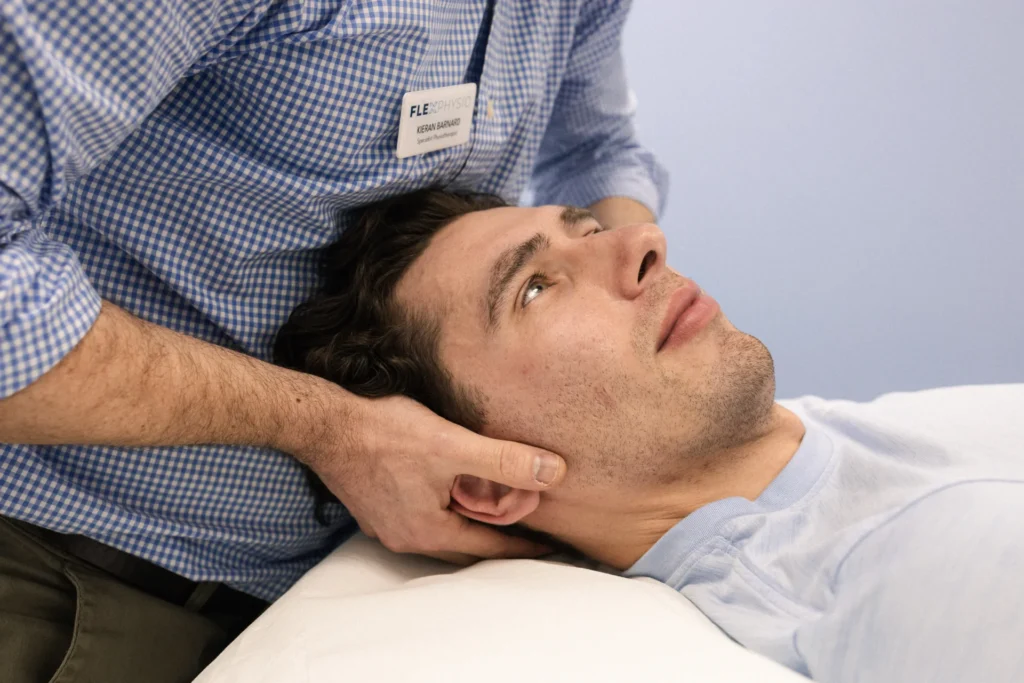
Neck pain can originate from joints, discs, muscles, ligaments or nerves. Pain location, stiffness, headaches, arm symptoms and activity-related patterns all help guide diagnosis.
Neck Conditions We Commonly Treat
- Acute neck pain and muscular strain
- Recurrent or persistent neck pain
- Mechanical neck pain related to posture or sustained loading
- Cervical disc bulge or disc herniation
- Cervical radiculopathy (nerve irritation causing arm pain)
- Neck pain with associated shoulder blade pain
- Whiplash associated disorders
- Tension-related neck pain and headaches
- Cervicogenic headaches
- Neck pain in runners and athletes
- Post-surgical cervical rehabilitation
Neck Pain With Arm Symptoms
Neck pain can sometimes be associated with pain, tingling or numbness travelling into the shoulder, arm or hand. This may be related to irritation of a cervical nerve.
Symptoms may include:
- Sharp, shooting or burning pain into the arm
- Pins and needles or numbness
- Arm weakness
- Increased symptoms with sustained neck positions
Management focuses on reducing nerve sensitivity, restoring neck movement, improving strength and gradually building load tolerance.

Headaches Related to Neck Pain
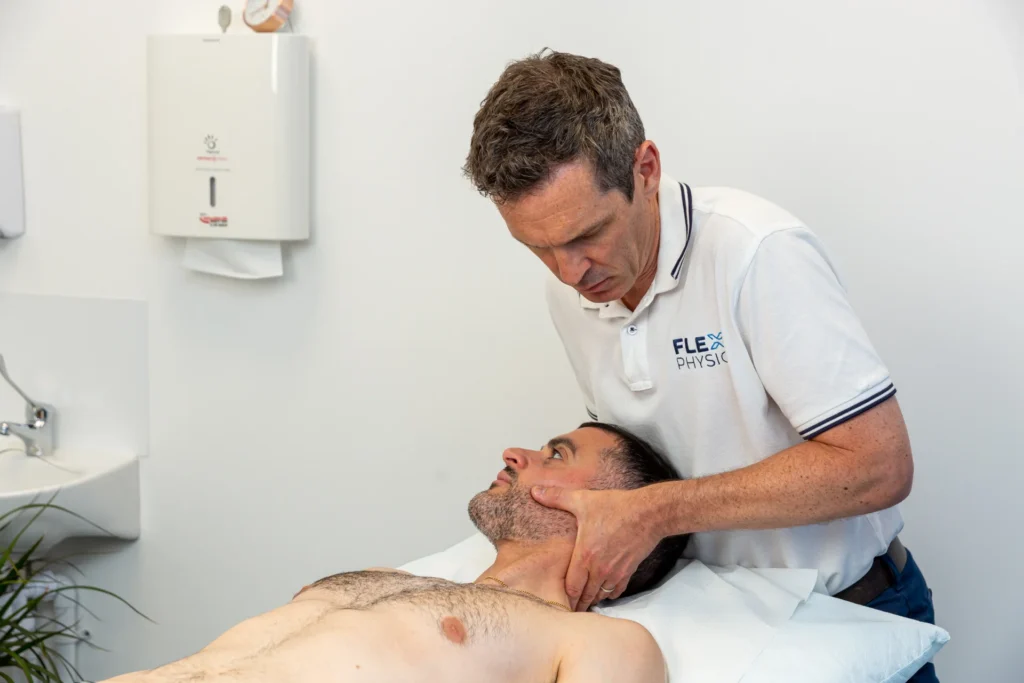
Some headaches originate from structures in the upper neck. These are known as cervicogenic headaches.
They often present as:
- Pain starting at the base of the skull
- Headache triggered by neck movement or sustained posture
- One-sided head pain
- Associated neck stiffness
Treatment focuses on improving upper neck mobility, strength and posture control.
Who We Help With Neck Pain
We regularly support:
- Office workers and desk-based professionals
- Remote workers with prolonged screen use
- Drivers and commuters
- Runners and endurance athletes
- Team sport athletes
- Active adults wanting to stay mobile and independent
- Individuals recovering from neck surgery
- People managing persistent or recurrent neck pain
Our clinicians apply structured, evidence-based principles to both competitive athletes and recreationally active individuals.
How Neck Pain is Assessed at Flex
Your neck assessment is tailored to your symptoms, goals and activity level. This may include:
- Detailed clinical history and symptom analysis
- Assessment of neck movement and stiffness
- Neurological testing for nerve involvement
- Strength testing of the deep neck flexors and shoulder girdle
- Postural and ergonomic assessment where relevant
- Functional testing for work or sport demands
The aim is to understand not just where your neck hurts, but why it hurts and what needs to change to support recovery.
Treatment Options for Neck Pain
Treatment is individualised and based on a clear diagnosis. Your plan may include one or more of the following:
Physiotherapy for neck pain
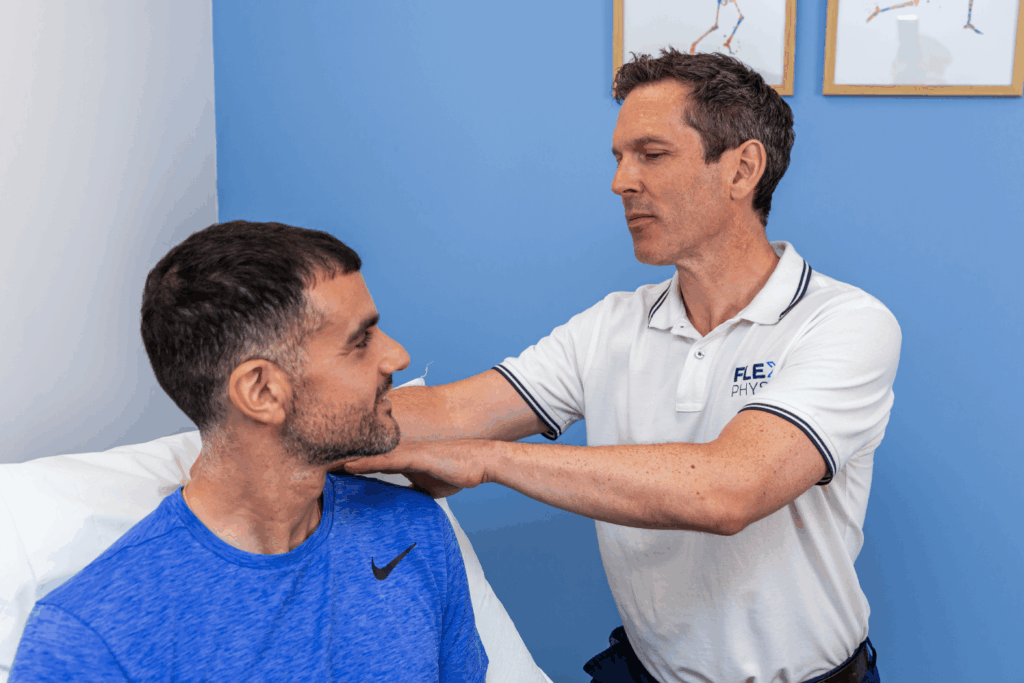
Hands-on treatment and rehabilitation focused on restoring movement, strength, control and confidence. Progressive exercise therapy is central to long-term improvement.
Linked service: Physiotherapy
Manual therapy and soft tissue treatment
Manual therapy techniques may be used to reduce pain, improve joint mobility and address stiffness. This can include cervical and thoracic joint mobilisations and soft tissue techniques to support rehabilitation progress.
Linked service: Sports Massage
Rehabilitation and exercise therapy
Progressive, supervised rehabilitation delivered in our clinic space to improve neck strength, scapular control and load tolerance while reducing recurrence risk.
Neck Pain FAQs
Why does my neck hurt without a clear injury?
Neck pain often develops due to sustained posture, changes in activity, stress or reduced strength and movement variability rather than a single event.
Is a cervical disc bulge serious?
Disc bulges are common, even in people without pain. Symptoms depend on whether a nerve is irritated. Most cases improve with structured rehabilitation.
Do I need an MRI for neck pain?
Most neck pain does not require imaging. MRI is considered if symptoms are severe, persistent or associated with significant neurological changes.
What are red flag symptoms?
Severe unrelenting pain, significant arm weakness, changes in coordination or balance, or symptoms affecting bladder or bowel control require urgent medical assessment.
Can neck-related arm pain improve without surgery?
Yes. Most cases of cervical radiculopathy improve with time and appropriate rehabilitation.
Should I rest with neck pain?
Prolonged rest is rarely helpful. Gradual, guided movement is usually more effective than complete rest.
When should I seek help for neck pain?
If pain is persistent, worsening, associated with arm symptoms, limiting work or sport, or causing concern, assessment is recommended.
Book Neck Pain Treatment in Burgess Hill
If you are experiencing neck pain and want a clear diagnosis and structured treatment plan, our team is here to help.
You can self-refer and book directly.
Expert assessment. Integrated care. Neck pain treatment at Flex Physiotherapy Burgess Hill.