
Ultrasound Imaging
Service
Musculoskeletal Ultrasound Imaging in Burgess Hill
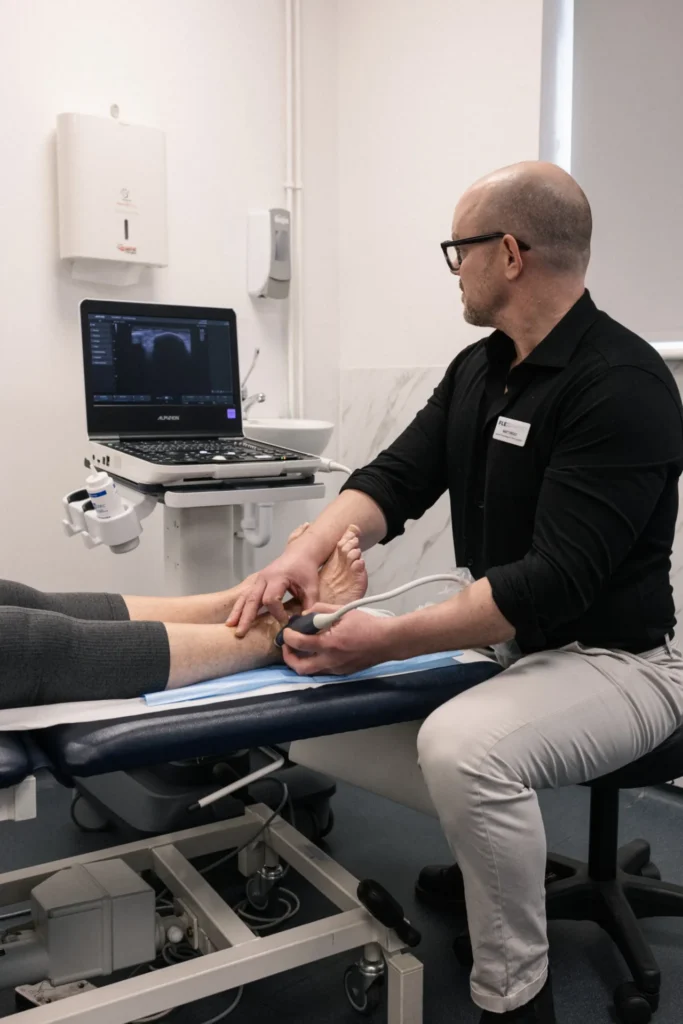
Musculoskeletal ultrasound imaging is a safe, non-invasive way to assess muscles, tendons, ligaments, joints and bursae in real time. It allows us to examine soft-tissue structures dynamically, helping to support accurate diagnosis and guide effective treatment decisions.
At Flex Physiotherapy Burgess Hill, ultrasound imaging is used as part of a comprehensive clinical assessment, never in isolation. Scans are carried out by experienced clinicians and interpreted alongside your symptoms, physical examination findings and movement assessment.
We support patients from Burgess Hill, Mid Sussex, Haywards Heath, Hassocks and the surrounding areas.
What is Musculoskeletal Ultrasound Imaging?
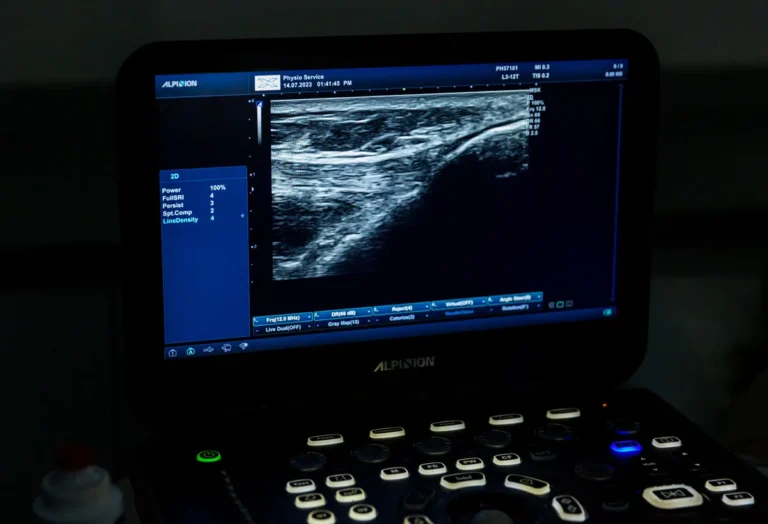
Ultrasound imaging uses high frequency sound waves to create live images of tissues beneath the skin. Unlike X rays or CT scans, ultrasound does not use radiation and is safe to use repeatedly.
Ultrasound allows us to:
- Visualise tendons, muscles, ligaments, nerves and bursae
- Assess joint inflammation or fluid
- Identify tendon thickening, tears or degeneration
- Observe structures during movement
- Compare one side to the other
How Ultrasound Imaging Supports Your Care
Ultrasound imaging does not replace a clinical assessment. Instead, it adds valuable information that helps confirm or clarify findings.
At Flex, ultrasound imaging is commonly used to:
- Support diagnosis when symptoms are unclear
- Confirm the source of pain or inflammation
- Guide treatment planning and rehabilitation
- Monitor response to treatment over time
- Support decision making around injections or referral
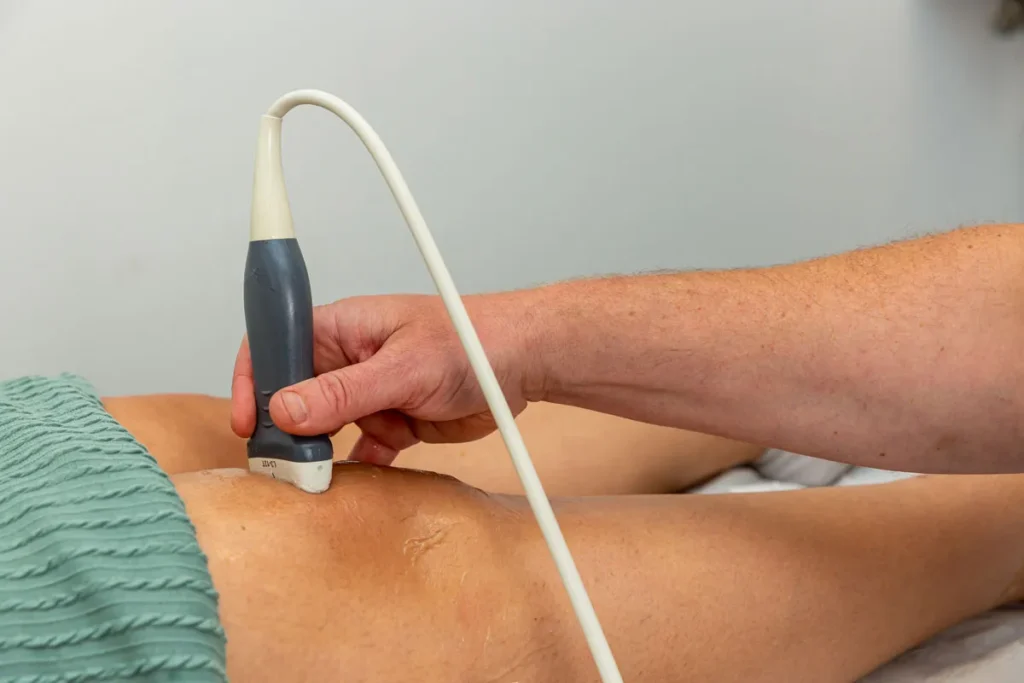
Conditions We Commonly Image
Hip
Ultrasound imaging may be used to assess soft tissue and joint related causes of hip pain, including:
- Gluteal tendinopathy / Trochanteric bursitis
- Hip osteoarthritis / Hip joint synovitis
- Iliopsoas bursitis / hip flexor irritation
- Hamstring tendinopathy and other tendon related pain around the hip
Knee
Ultrasound imaging may support assessment of:
- Knee osteoarthritis
- Patellofemoral pain and soft tissue irritation
- Meniscal related pain
- Iliotibial band irritation
- Pes anserine bursitis
- Baker’s cyst swelling
- Ligament tears / sprains
- Patellar and quadriceps tendinopathy
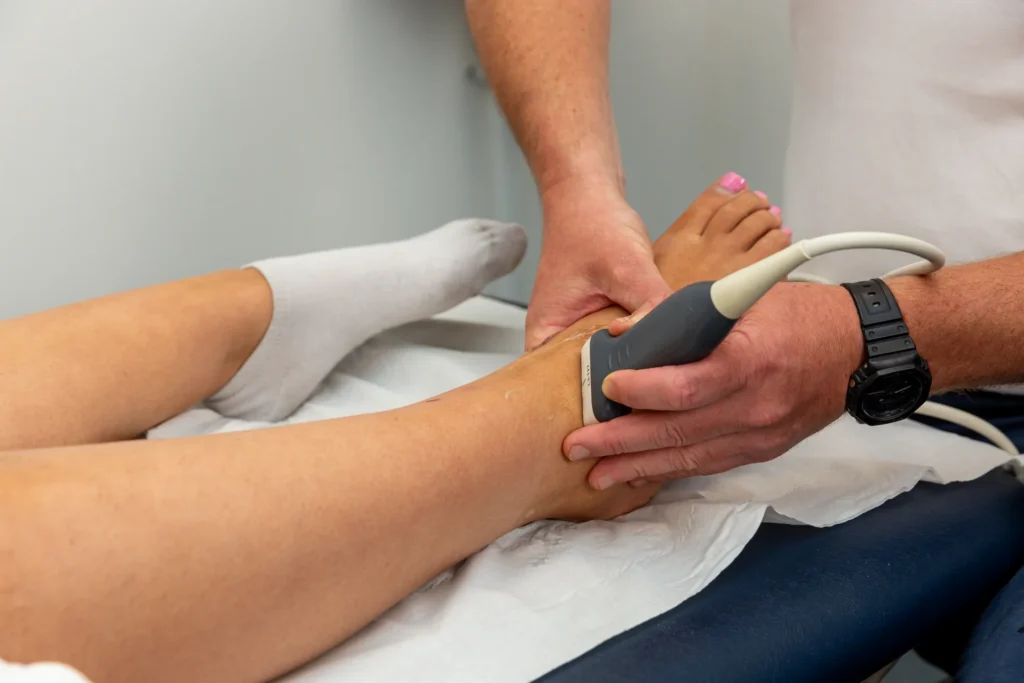
Foot and Ankle
Ultrasound imaging is commonly used for:
- Foot and ankle osteoarthritis
- Plantar fasciitis / heel pain
- Achilles tendinopathy
- Retrocalcaneal bursitis
- Peroneal tendon irritation
- Tibialis posterior tendon pain
- Ankle sprains
- Morton’s neuroma
Shoulder
Ultrasound imaging may be used to assess:
- Shoulder osteoarthritis
- Shoulder impingement type pain
- Subacromial bursitis
- Frozen shoulder
- Calcific rotator cuff tendinopathy
- Rotator cuff related pain
- Acromioclavicular joint pain
- Biceps tendon tenosynovitis
Ultrasound is highly effective for assessing rotator cuff tendons and bursae.
Elbow
Ultrasound imaging may help assess:
Osteoarthritis of the elbow joint
- Tennis elbow or lateral epicondylitis
- Golfer’s elbow or medial epicondylitis
- Cubital tunnel
- Olecranon bursitis
- Bicep / triceps tendinopathy
Hand and Wrist
Ultrasound imaging may be used for:
- Hand and wrist osteoarthritis
- De Quervain’s tenosynovitis
- Carpal tunnel
- Trigger finger or trigger thumb
- Flexor or extensor tendon irritation
- Ganglionic cysts
What Our Ultrasound Service Does Not Assess
- We do not scan lumps or bumps
- We do not scan the spinal column
- We do not assess suspected tumours or cancer
- We do not perform abdominal, vascular or internal organ scan
- We do not replace MRI for deep joint cartilage or bone assessment
If you have a lump, bump or unexplained swelling, this should be assessed by your GP, who can arrange the appropriate investigations or referrals.
If ultrasound imaging is not appropriate for your symptoms, we will explain this clearly and advise on the most suitable next step.
What to Expect at an Ultrasound Imaging Appointment
Step 1
A discussion of your symptoms and a physical assessment.
Step 2
Ultrasound scanning of the relevant area .
Step 3
Clear explanation of findings during the appointment.
Step 4
Discussion of how the results inform treatment, rehabilitation or referral.
Step 5
Clinic letter, including ultrasound report sent directly to client on the day of appointment.
Ultrasound Imaging and Treatment Planning
Ultrasound imaging is most valuable when combined with expert clinical reasoning. Findings are used to guide:
- Physiotherapy and rehabilitation programmes
- Activity and load modification
- Injection decisions where appropriate
- Referral for further imaging or specialist input if needed
Scanning is never used in isolation.
Ultrasound Scanning and Guided Injections - Flex Physiotherapy Burgess Hill
Ultrasound Imaging FAQs
Is ultrasound imaging painful?
No. The scan is painless, although gentle pressure may be applied with the probe.
Do I need a referral for an ultrasound scan?
No. You can self refer and book directly.
Will I get the results immediately?
Yes. Findings are explained during your appointment and included in a written report.
How much does an ultrasound imaging appointment cost?
An ultrasound imaging appointment costs £180. This includes a full clinical assessment, ultrasound scan and a written report explaining the findings and how they relate to your symptoms and treatment plan.
Can ultrasound imaging replace an MRI scan?
Ultrasound is excellent for assessing soft tissues but cannot replace MRI for deeper joint structures.
Do you scan lumps and bumps?
No. We do not scan lumps, bumps or suspected masses. If this is a concern, you should speak to your GP, who can arrange the appropriate assessment and investigations.
What areas do you cover for ultrasound imaging?
We regularly see patients from Burgess Hill, Mid Sussex, Haywards Heath, Hassocks, Brighton and Hove, Crawley and surrounding areas. Due to direct train links and road access, we also treat patients travelling from London, Surrey, Kent and across the South East.