
Common Causes of Elbow Pain
Elbow pain can arise from tendons, joints, nerves or surrounding soft tissues. A clear diagnosis is essential to guide effective treatment.
Elbow pain commonly managed by physiotherapy
Physiotherapists commonly assess and treat:
- Tennis elbow (lateral epicondylitis)
- Golfer’s elbow (medial epicondylitis)
- Tendon overload from gripping, lifting or repetitive work
- Elbow stiffness and reduced movement
- Nerve related symptoms such as cubital tunnel irritation
- Pain following injury, fracture or surgery
- Elbow pain affecting sport, gym training or manual work
Many elbow conditions are related to how load is applied through the arm rather than a single injury.

Who We Help With Elbow Pain
We regularly treat:
- Racket sport athletes including tennis, padel and squash players
- Golfers
- Gym users and weightlifters
- Manual workers and tradespeople
- Desk-based professionals with repetitive arm use
- Recreational and competitive athletes
Our clinicians have extensive experience working in elite sport and high-performance environments, applying the same principles of load management and rehabilitation to people of all activity levels.
How Elbow Pain is Assessed at Flex
Your elbow assessment is tailored to your symptoms, occupation and goals. This may include:
- Detailed history of pain, activity and load exposure
- Assessment of elbow, wrist and shoulder movement
- Strength testing of the forearm, grip and upper limb
- Nerve screening where appropriate
- Functional testing related to work, sport or training
- Review of technique, equipment or training load where relevant
The aim is to identify why the elbow has become painful and what needs to change to allow recovery.
Treatment Options for Elbow Pain
Treatment is individualised and based on a clear diagnosis. Your plan may include one or more of the following:
Physiotherapy for Elbow Pain
Targeted rehabilitation to restore strength, control and load tolerance through the elbow, forearm and shoulder. Exercise therapy is central to long-term improvement.
Manual Therapy and Soft Tissue Treatment
Manual therapy techniques may be used to reduce pain, improve movement and address stiffness. This can include joint mobilisations, soft tissue techniques and sports massage to support rehabilitation progress.
Rehabilitation and Exercise Therapy
Progressive loading programmes designed to restore tendon capacity and reduce recurrence, delivered in clinic and supported by home exercises.
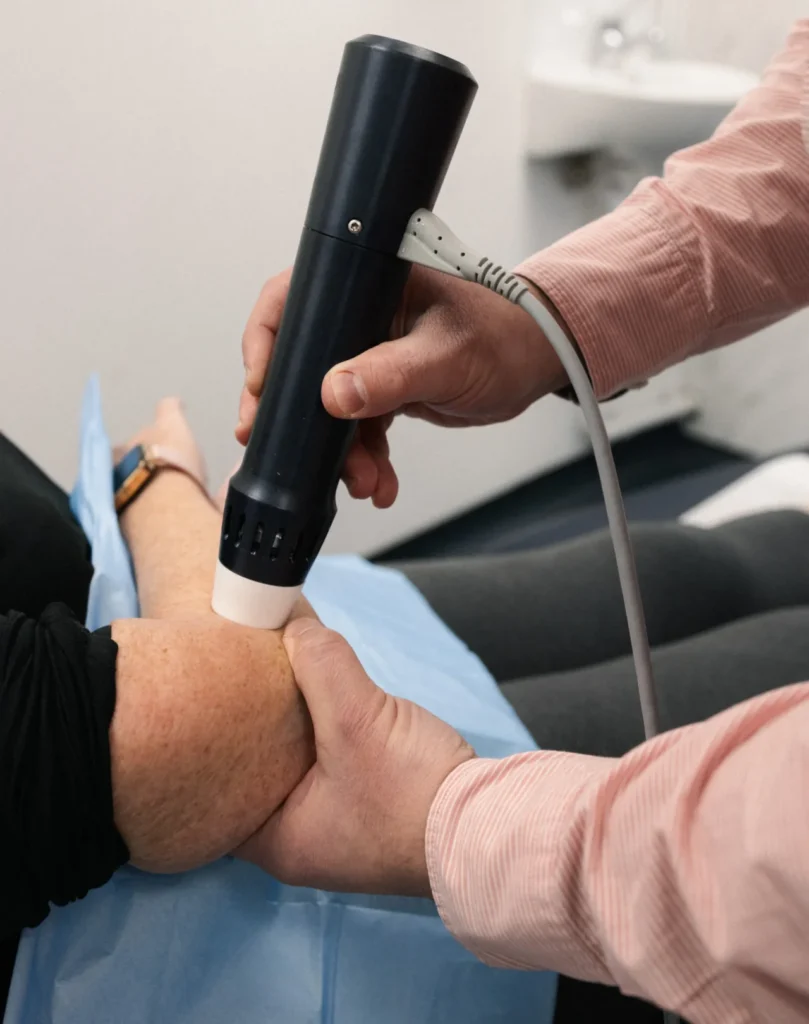
Shockwave Therapy
For chronic tendon-related elbow pain such as tennis or golfer’s elbow that has not responded to exercise-based rehabilitation alone.
Ultrasound Imaging
Used where diagnosis is unclear or to assess tendon, joint or nerve structures in more detail.
Ultrasound Guided Injections
In selected cases, ultrasound guided injections may be considered for ongoing elbow pain or inflammation that is limiting movement or rehabilitation progress. These are used to support rehabilitation rather than replace it.
Return to Sport and Performance Rehabilitation
For athletes or active individuals, rehabilitation may include sport-specific loading and return-to-play planning.
Elbow Pain FAQs
Is tennis elbow always caused by tennis?
No. Tennis elbow commonly affects people who do not play tennis. It is often related to repetitive gripping, lifting or load through the forearm.
How long does elbow pain take to settle?
Recovery time varies depending on the condition and how long symptoms have been present. Most elbow pain improves with the right rehabilitation approach, but persistent symptoms may take longer to resolve.
Do injections cure elbow pain?
Injections can help reduce pain and sensitivity in some cases but are not a cure. Long-term improvement usually depends on progressive rehabilitation and load management.
Do you treat long-standing elbow pain?
Yes. We frequently see people with persistent elbow pain that has not responded to previous treatment.