
What is Sports Physiotherapy?
It is commonly used to manage injuries such as muscle strains, ligament injuries including ACL and ankle ligament injuries, tendon conditions such as achilles and patellar tendinopathy, joint injuries, overuse injuries and bone stress injury conditions. Sports physiotherapy also plays a key role in rehabilitation following surgery or time away from sport.
At Flex, sports physiotherapy integrates clinical assessment, advanced testing, structured rehabilitation and repeat assessment. Testing provides the objective data that informs your rehabilitation plan, allowing progress and return to sport decisions to be based on evidence rather than symptoms alone.
Our Sports Physiotherapy Approach
Our sports physiotherapy service is built around three key components that work together to support injury prevention, rehabilitation and return to sport.
1. Screening and Injury Prevention
Screening helps identify movement patterns, strength deficits and load tolerance issues that may increase injury risk. This allows us to address problems early and tailor rehabilitation or training before pain or injury develops.
Screening is particularly valuable for athletes increasing training load, returning from injury or preparing for competition.
2. Advanced Assessment Technology
We use advanced assessment technology to provide objective insight into how your body is performing. This level of testing is rarely available outside professional sport and allows us to make evidence based decisions rather than relying on symptoms alone.
VALD Force Plates
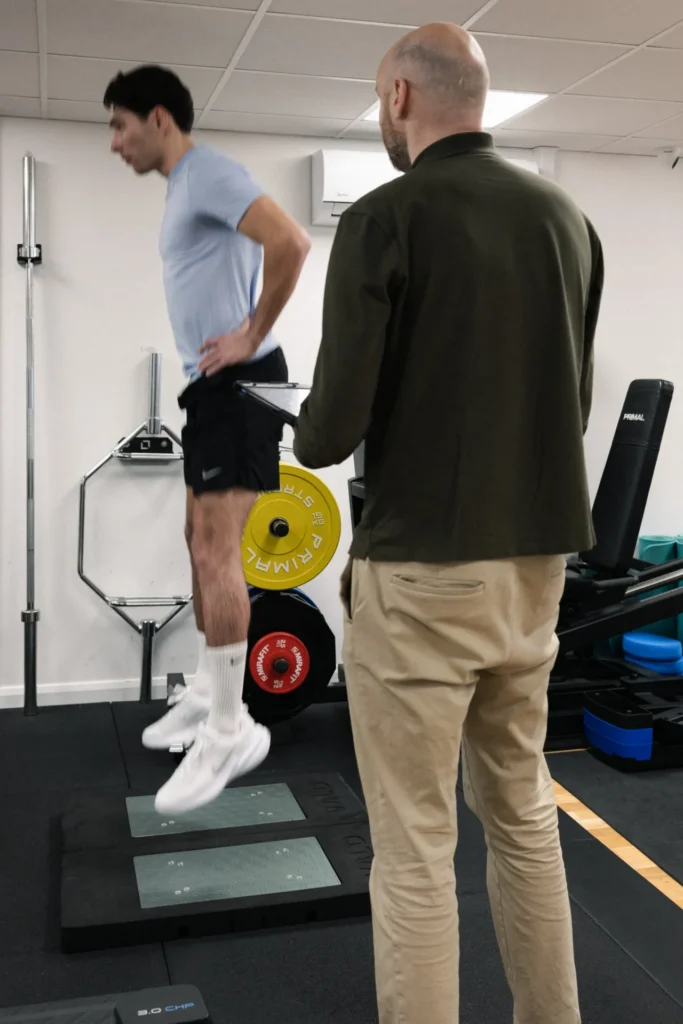
VALD force plates are used to assess balance, jump performance, movement control and limb loading. This helps identify asymmetries, compensations and hidden risk factors that may not be visible during standard clinical assessment.
Hand Held Dynamometry
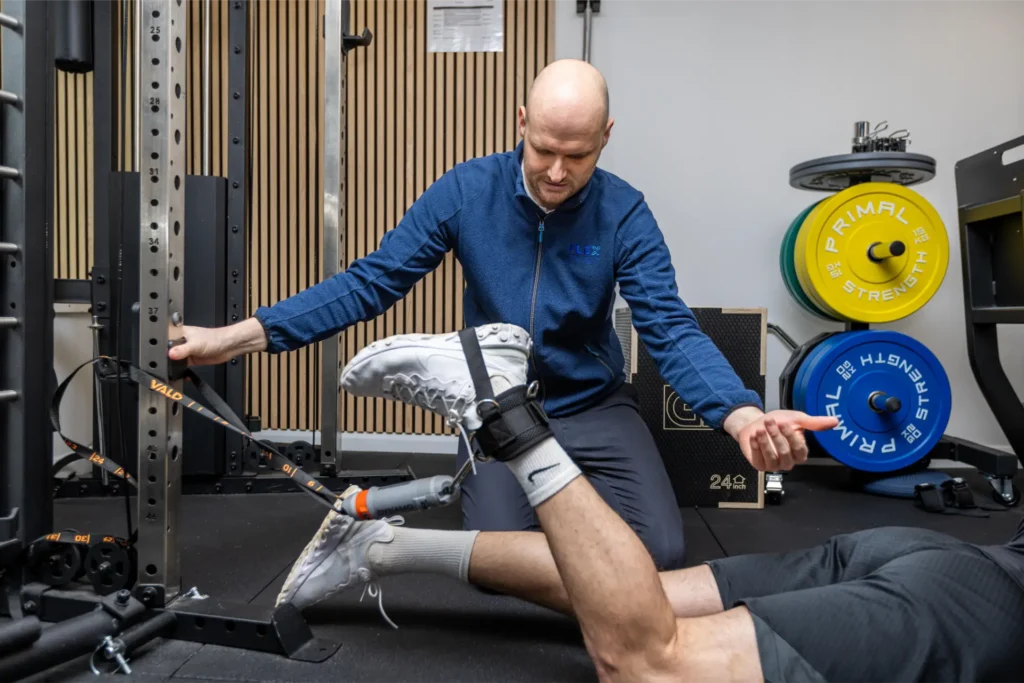
Hand held dynamometry is used to accurately measure the strength and power of specific muscles and joints. Results are compared against age and gender normative data to identify meaningful deficits and guide rehabilitation planning.
The data gathered forms the foundation of your rehabilitation or performance plan and allows progress to be measured objectively over time.
3. Functional and Capacity Testing
Functional and capacity testing focuses on how your body performs during real world, gym based movement rather than isolated measures alone.
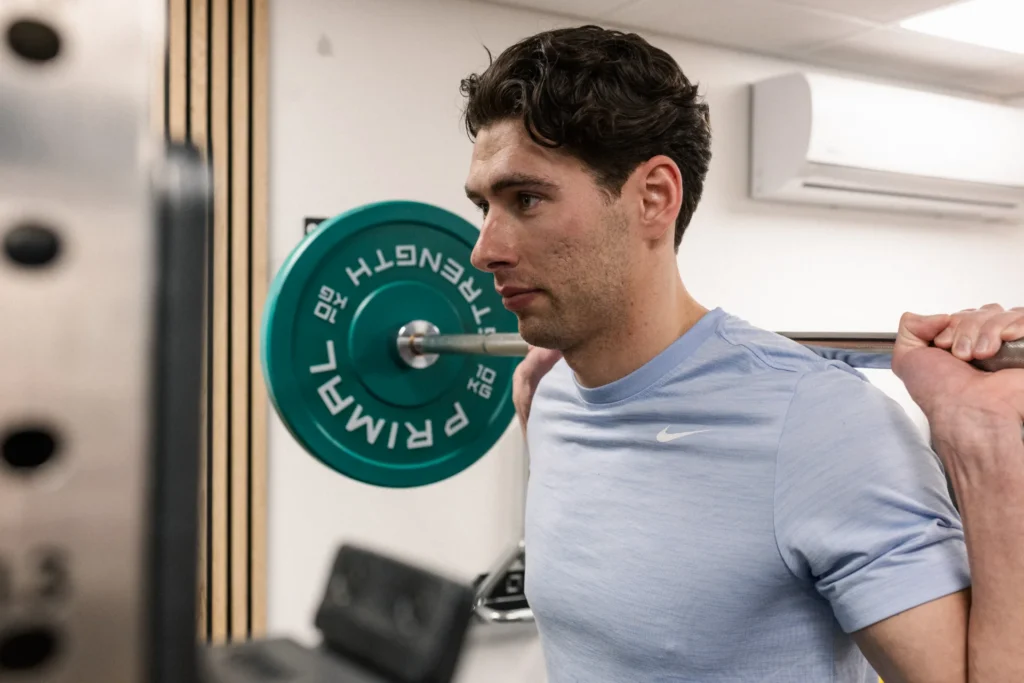
Testing takes place in our on site rehabilitation gym and may include strength, endurance and control based tasks using equipment such as leg press machines, dumbbells, cables, mats, gym balls and treadmills. These tests help assess readiness for training, competition or return to sport by evaluating how well you tolerate load, fatigue and repeated movement.
This ensures rehabilitation and performance planning reflect the true physical demands of your sport or activity.
How Sports Physiotherapy Supports Return to Sport
Return to sport decisions should be based on more than pain alone. At Flex, objective testing provides the data needed to guide rehabilitation and confirm readiness at each stage.
Test
Baseline assessment of strength, balance, movement and capacity.
Rehab
Targeted rehabilitation built directly from your testing results.
Load
Progressive loading and performance work aligned to sport demands.
Re-Test
Repeat testing to objectively measure progress and guide decisions.
Return
Confident return to sport based on data, performance and clinical reasoning.
What to Expect During an Advanced Assessment
Clinical Assessment and Goals
We discuss your injury history, sport, training demands and goals to understand what you need from assessment and rehabilitation.
Objective Testing
A standalone testing session is completed to establish a clear baseline of strength, balance and physical capacity.
Results and Benchmarking
Your results are explained clearly and compared against age and gender normative data to highlight strengths, deficits and risk factors.
Rehabilitation Planning
Testing data is used to design a precise, individualised rehabilitation or performance programme aligned to your goals.
Re-Testing and Progression
Repeat testing is used to track improvement over time and support informed return to sport decisions.
Why Choose Flex for Sports Physiotherapy?
- All of our physiotherapists have worked in elite sport environments, including professional football, elite rugby and other high performance settings
- Elite sport experience underpins how we assess, rehabilitate and support return to sport at every level
- We routinely treat high level and competitive athletes alongside dedicated recreational sportspeople
- Every athlete benefits from the same structured, data driven and evidence based approach
- Advanced testing and supervised rehabilitation guide decision making and progression
- We offer a level of assessment and performance focused care rarely available outside professional sport
What is Sports Physiotherapy? Meet Our Therapist
Sports Physiotherapy FAQs
What is the difference between sports physiotherapy and standard physiotherapy?
Sports physiotherapy places greater emphasis on performance, objective testing and return to sport decision making.
Why is testing so important in sports physiotherapy?
Testing provides objective data that informs your rehabilitation plan. Results are compared against age and gender benchmarks to identify deficits, guide exercise prescription and track progress. This reduces guesswork and supports safer return to sport decisions.
Is the testing session a standalone appointment?
Yes. The testing session is a dedicated appointment designed to gather detailed performance data. This data is then used to inform and personalise your rehabilitation or performance programme.
Do you routinely treat high level athletes?
Yes. We regularly work with high level and competitive athletes across sports such as rugby, football, tennis, golf, gymnastics, running and other performance based activities.
Why is repeat testing important?
Repeat testing allows us to objectively measure progress and confirm readiness to return to sport, rather than relying on symptoms alone.
What equipment do you use during assessment?
We use VALD force plates, hand held dynamometry and gym based functional testing alongside clinical assessment.
Is sports physiotherapy suitable for non elite athletes?
Yes. Sports physiotherapy is suitable for anyone who wants a structured, objective approach to recovery, injury prevention or performance, regardless of level.
Is sports massage used as part of sports physiotherapy?
Yes, where appropriate. Sports massage can be integrated alongside rehabilitation and performance work to support recovery and improve tolerance to training.