
Common Causes of Hip Pain
Hip pain can arise from the joint itself, surrounding tendons and muscles, bursae or referred structures from the lower back or pelvis. A clear diagnosis is essential for effective treatment.
Hip Pain Commonly Managed By Physiotherapy
Physiotherapists commonly assess and treat:
- Hip osteoarthritis
- Gluteal tendinopathy and lateral hip pain
- Trochanteric bursitis
- Hip flexor and iliopsoas related pain
- Femoroacetabular impingement (FAI)
- Hip stiffness and reduced mobility
- Total hip replacement recovery
- Hip resurfacing recovery
- Hip arthroscopy recovery
- Hip osteotomy recovery
- Hip pain affecting running, walking or sport
Many hip problems are related to how load is managed through the joint and surrounding muscles rather than structural damage alone.

Who We Help With Hip Pain
We regularly support:
- Runners and endurance athletes
- Team sport athletes including football, rugby and hockey players
- Walkers and hikers
- Active adults wanting to stay mobile and independent
- People with physically demanding jobs
- Individuals recovering from hip surgery
- Women during pregnancy and after childbirth
Our clinicians have extensive experience working in elite sport and high-performance environments, applying the same principles of movement quality, strength and load management to both competitive athletes and recreationally active individuals.
How Hip Pain is Assessed at Flex
Your hip assessment is tailored to your symptoms and goals. This may include:
- Detailed clinical history and symptom analysis
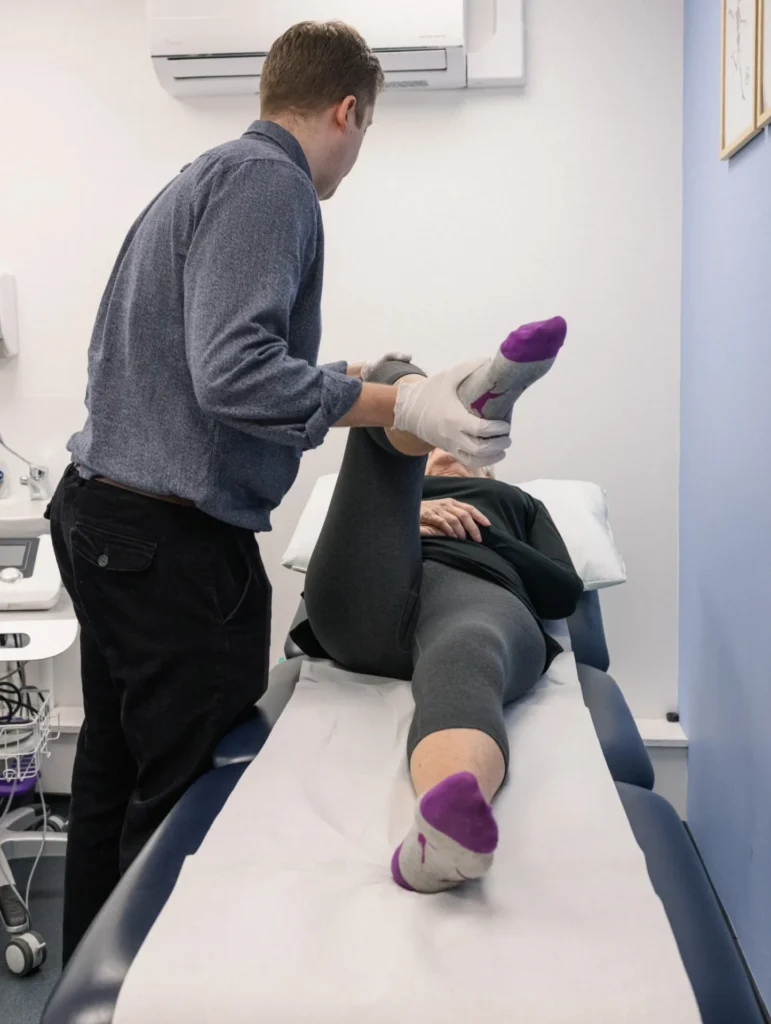
- Assessment of hip joint movement and stiffness
- Strength testing of the gluteal muscles, hip flexors and lower limb
- Functional testing such as walking, squatting and stair use
- Running or movement analysis where appropriate
- Screening of the lower back and pelvis if relevant
The aim is to understand why your hip has become painful and what needs to change to allow recovery and prevent recurrence.
Treatment Options for Hip Pain
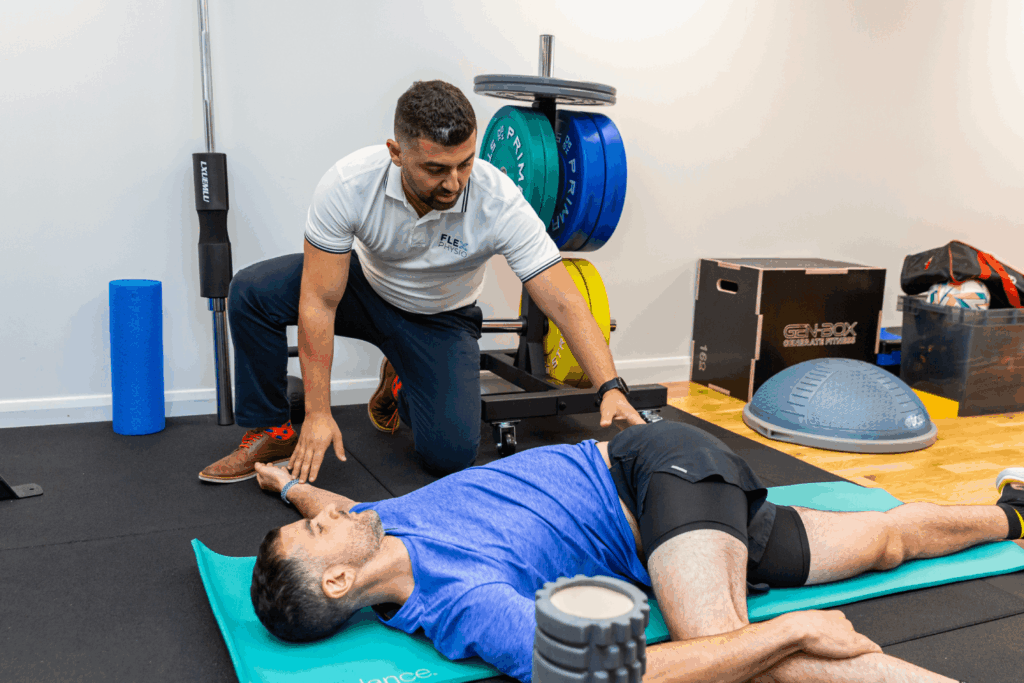
Treatment is individualised and based on a clear diagnosis. Your plan may include one or more of the following:
Physiotherapy for Hip Pain
Hands-on treatment and rehabilitation focused on restoring movement, strength and control around the hip. Exercise therapy plays a central role in long-term improvement and post-surgical recovery.
Manual Therapy and Soft Tissue Treatment
Manual therapy may be used where appropriate to reduce pain, improve joint mobility and address stiffness. This can include hip joint mobilisations, soft tissue techniques and sports massage to support rehabilitation progress.
Rehabilitation and Exercise Therapy
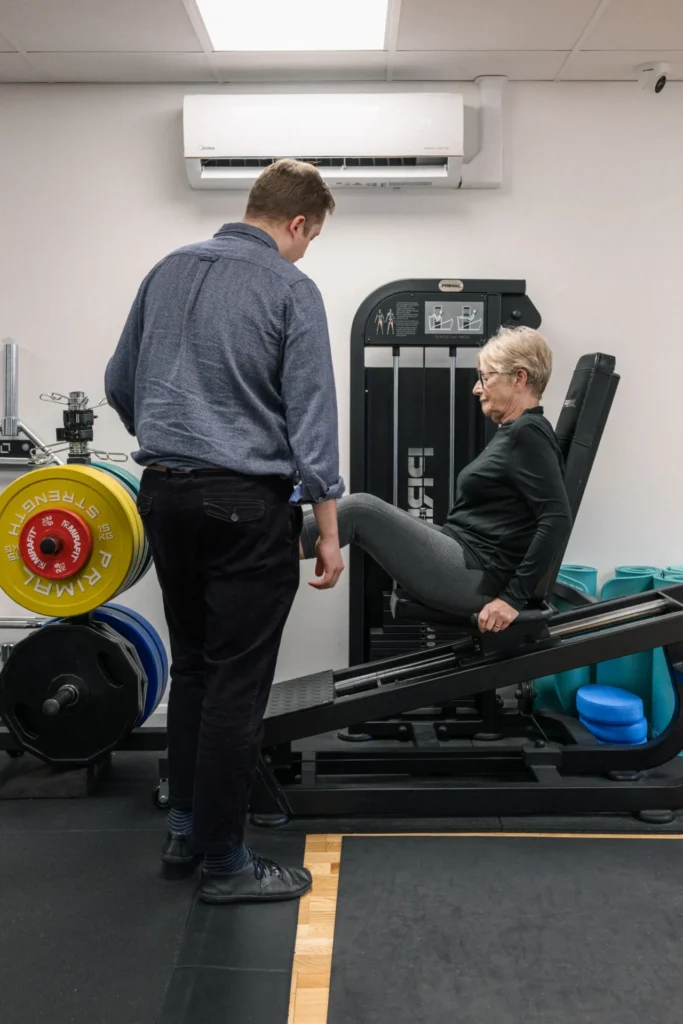
Progressive, supervised rehabilitation delivered in our on-site gym to improve strength, control and load tolerance while supporting long-term hip health and post-operative recovery.
Shockwave Therapy
For selected tendon-related hip conditions such as persistent gluteal tendinopathy or lateral hip pain that have not responded to exercise-based rehabilitation alone.
Ultrasound Imaging
Used where diagnosis is unclear or to assess tendons, bursae or joint structures in more detail to guide treatment decisions.
Ultrasound Guided Injections
Ultrasound guided injections may be considered for people with ongoing hip pain, stiffness or symptoms that are limiting movement or rehabilitation progress.
Injections can be targeted to:
- The bursa, for conditions such as trochanteric bursitis or lateral hip pain
- The hip joint itself (intra-articular injections)
Depending on your condition, this may involve:
- Steroid injections to reduce pain and inflammation
- Hyaluronic acid injections to improve joint lubrication and cushioning in osteoarthritic hips
Injections are used selectively to reduce symptoms and create an opportunity to progress rehabilitation rather than as a standalone solution.
Return to Sport and Performance Rehabilitation
For active individuals and athletes, rehabilitation may include sport-specific loading and return-to-play planning.
Hip Pain FAQs
Is hip pain always caused by arthritis?
No. While arthritis can cause hip pain, many people experience symptoms due to tendon overload, muscle weakness, movement patterns, pelvic factors or post-surgical changes rather than joint degeneration alone.
Can hip pain be treated without surgery?
In many cases, yes. Most hip pain responds well to appropriate rehabilitation, strength-based exercise and load management.
Do you treat hip pain after surgery?
Yes. We regularly treat patients following hip replacement, hip resurfacing, hip arthroscopy and hip osteotomy, supporting safe recovery and return to activity.
Does shockwave therapy help hip pain?
Shockwave therapy can be helpful for certain types of hip pain, particularly persistent tendon-related conditions such as gluteal tendinopathy that have not responded to exercise-based rehabilitation alone. It is not suitable for all hip conditions and will only be recommended if appropriate.
Do you treat clicking or snapping hips?
Yes. Clicking or snapping around the hip is commonly related to tendons, muscle control or movement patterns. Treatment focuses on addressing the underlying cause rather than the noise itself.
Do you treat women’s health or pelvic-related hip pain?
Yes. Hip pain can be linked to pelvic health factors, pregnancy or postnatal changes. We offer specialist women’s health and pelvic health physiotherapy and can integrate this into your hip treatment where appropriate.
Can you treat hip pain during pregnancy?
Yes. We regularly treat hip and pelvic pain during pregnancy. Assessment and treatment are adapted to ensure they are safe, appropriate and comfortable.
Do you treat hip pain after childbirth?
Yes. Hip pain after childbirth is common and may relate to changes in strength, load and pelvic stability. We provide postnatal physiotherapy and can integrate hip rehabilitation with pelvic health support if needed.
Is hip pain always coming from the hip joint?
No. Hip pain can sometimes be influenced by the lower back, pelvis or surrounding muscles and tendons. A thorough assessment helps identify the true source of symptoms.
Do you treat long-standing or complex hip pain?
Yes. We frequently see people with persistent or complex hip pain, including those who have tried previous treatment without success.