
What is Tendonitis?
A tendon connects muscle to bone and helps transfer force during movement. When a tendon becomes irritated and sensitive due to overload, it can cause localised pain and reduced function.
Common symptoms include:
- Localised pain over a tendon
- Pain during or after activity
- Morning stiffness
- Tenderness to touch
- Reduced strength
Tendon pain is usually load-related and responds best to progressive strengthening rather than complete rest.
Common Tendon Injuries We Treat
We regularly manage:
- Achilles tendinopathy
- Patellar tendinopathy
- Rotator cuff tendinopathy
- Gluteal tendinopathy
- Tennis elbow (lateral elbow tendinopathy)
- Golfer’s elbow (medial elbow tendinopathy)
- De Quervain’s tendon irritation
- Hamstring tendon pain
- Biceps tendon pain

Acute vs Persistent Tendon Pain
Reactive tendon pain
Often develops after a sudden increase in activity. Pain may be sharp and noticeable during loading.
Persistent tendon pain
Symptoms may fluctuate over time and be aggravated by repeated loading or high training volumes.
Management focuses on appropriate load modification followed by progressive strengthening.
Who We Help With Tendon Pain
We regularly support:
- Runners and endurance athletes
- Football and team sport athletes
- Gym and strength training athletes
- Golfers and racket sport players
- Manual workers
- Active adults wanting to stay mobile
- Individuals with recurrent tendon injuries
Our clinicians apply structured, data-driven principles used in performance environments to both athletes and non-athletes.
How Tendonitis is Assessed at Flex
Your assessment is tailored to your symptoms, goals and activity demands. This may include:
- Detailed history of training load and symptom progression
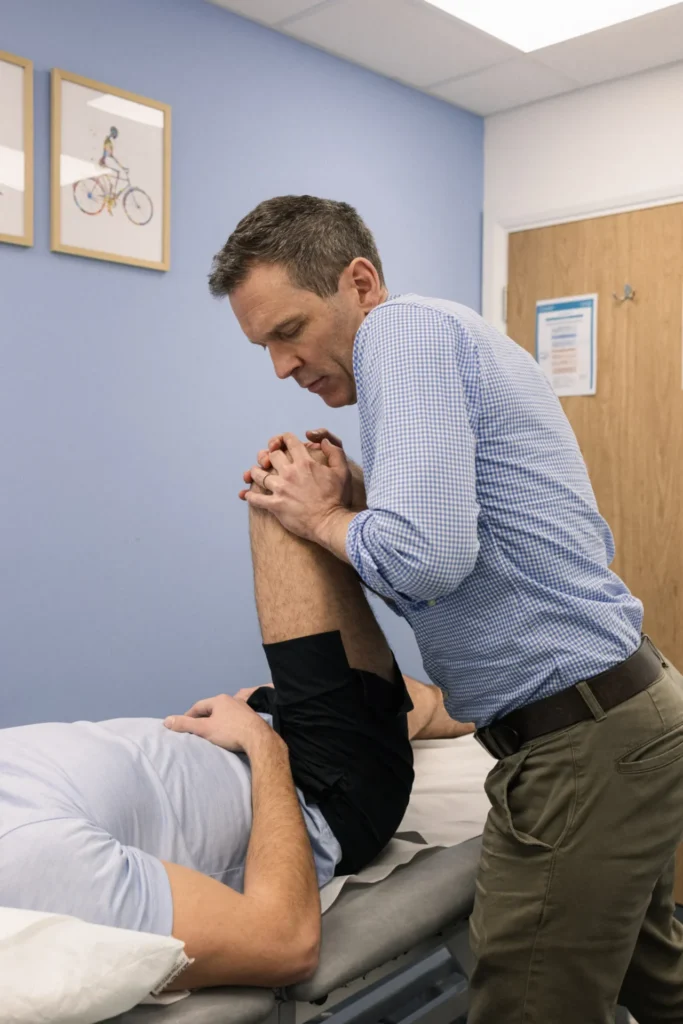
- Assessment of tendon pain during specific movements
- Strength testing of the involved muscle group
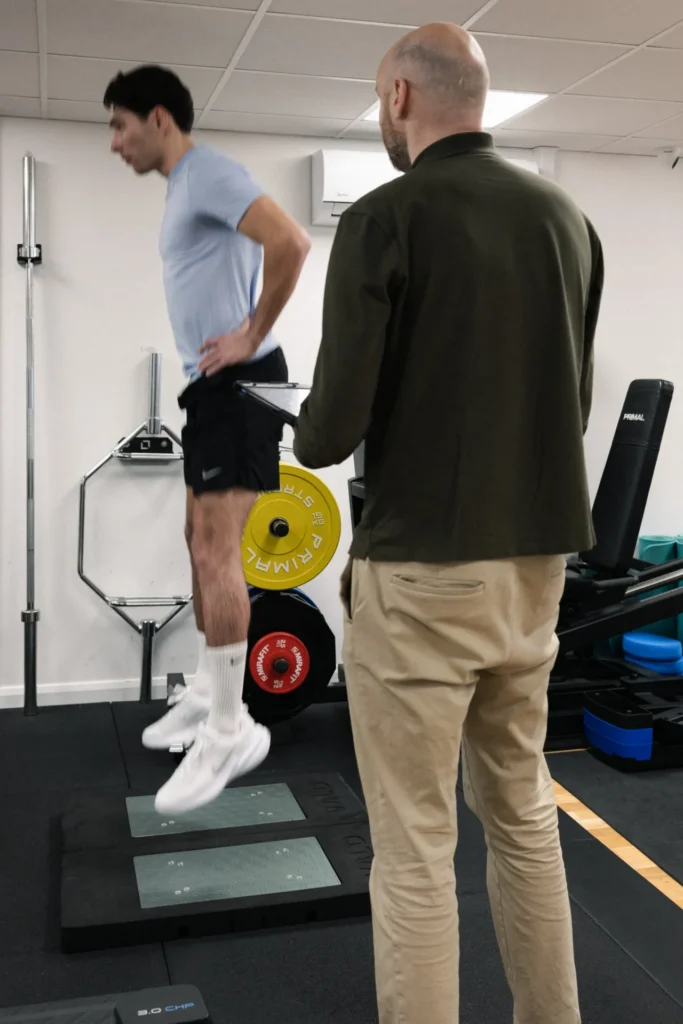
- Hand held dynamometry to objectively measure strength deficits
- Force plate testing where relevant to assess lower limb loading and asymmetry
- Functional testing specific to your sport or work
The aim is to understand not just which tendon is painful, but why it has become overloaded and what needs to change to support recovery.
Treatment Options for Tendonitis
Treatment is individualised and based on a clear diagnosis and load plan.
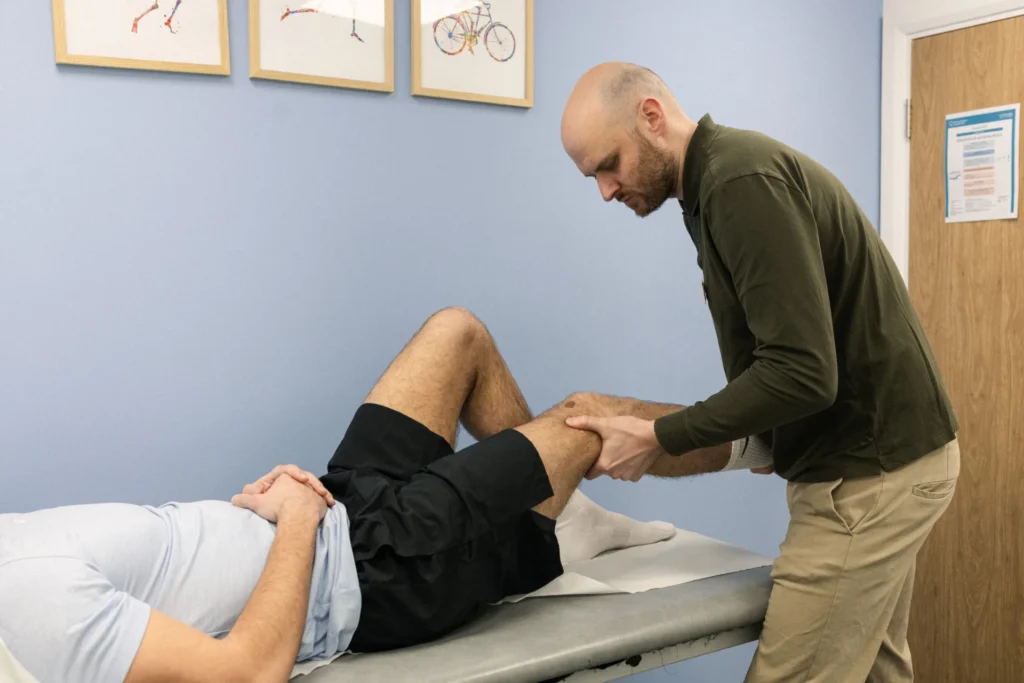
Physiotherapy for tendon pain
Hands-on treatment and structured rehabilitation focused on progressive strengthening and restoring tissue capacity.
Linked Service: Physiotherapy
Rehabilitation and progressive loading
Tendon-specific strengthening programmes designed to improve resilience and reduce recurrence risk.
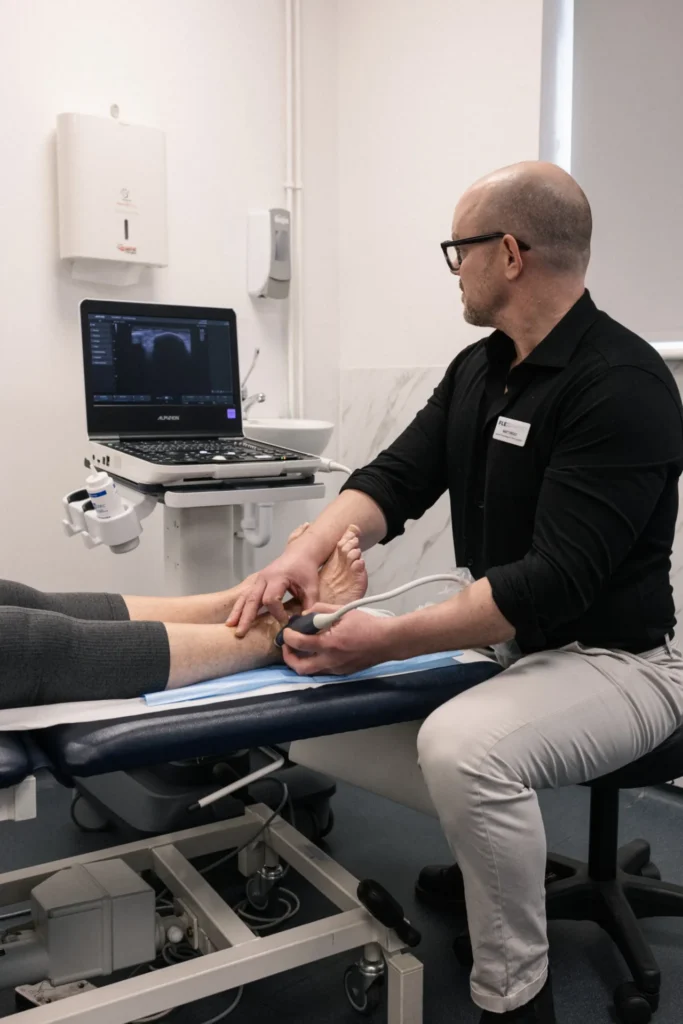
Ultrasound imaging
Diagnostic ultrasound can be used to assess tendon structure and surrounding soft tissues where symptoms are persistent, diagnosis is unclear, or progress is not as expected. This can help guide rehabilitation planning and confirm the most relevant pain generator.
Linked service: Ultrasound Imaging
Ultrasound guided injections (USGI)
In selected cases, ultrasound guided injections may be used to target specific sites of inflammation or irritation such as tendon sheaths, bursae or joints when pain is limiting rehabilitation progress. Injections are used to support progressive loading rather than replace it.
Linked service: Ultrasound Guided Injections
Shockwave therapy (ESWT)
Extracorporeal shockwave therapy may be used for persistent tendon pain that has not responded fully to progressive loading alone.
Linked service: Shockwave Therapy
Objective strength and performance testing
Hand held dynamometry and force plate testing allow us to measure strength deficits, monitor progress and guide safe return to higher-level activity.
Linked service: Sports Physiotherapy and Performance Assessment
Tendonitis FAQs
Should I completely rest a painful tendon?
Complete rest is rarely helpful. Tendons respond best to structured, progressive loading.
How long does tendon pain last?
Recovery varies depending on severity and duration of symptoms. Persistent cases may take several weeks to months but improve with consistent rehabilitation.
Is shockwave therapy effective?
Shockwave therapy can be helpful in selected persistent tendon cases, particularly when combined with strengthening.
Why does my tendon feel worse the day after activity?
Tendon pain is often reactive and can flare 24 hours after loading. This is monitored and adjusted within your rehabilitation plan.
Can tendon pain come back?
Recurrence risk is reduced when strength, load management and progression are addressed properly.
When should I seek help?
If tendon pain is persistent, worsening or limiting your activity or sport, assessment is recommended.
Book Tendonitis Treatment in Burgess Hill
If you are experiencing tendon pain and want a clear diagnosis and structured rehabilitation plan, our team is here to help.
You can self-refer and book directly.
Expert assessment. Integrated care. Tendonitis treatment at Flex Physiotherapy Burgess Hill.